Home / Jobs / Facility and property managers
Jobs for facility managers
Concrete scanning for facility managers
Every fit-out brings a contractor with a drill: screens, shelving, signage, a server room cable route, a kitchen extract core. You hold the drawings, the permit to drill and the building when something goes wrong.
Before a contractor drills in your building
Stop and call the engineer and a scanning professional if
- the slab may be post-tensioned, such as a parking garage with patched anchor pockets at the slab edge
- the work is a core near a structural element
- someone needs a documented survey or report
The short version of this page. The details and sources follow below.
From Concrete scanning for facility managers: drillclear.com/jobs/facility-managers, where every step has its sources.
- US
- permit to drill, as-builts, tenant improvement, PT garage
- UK
- permit to work, O&M manual, as-built drawings, fit-out
The jobs
01A permit to drill
Before a contractor cores, ask what was scanned, where, and what was marked.
02The PT parking garage
Patched anchor pockets at the slab edge are a clue. Nothing gets cored there without the engineer.
03Fit-out fixings
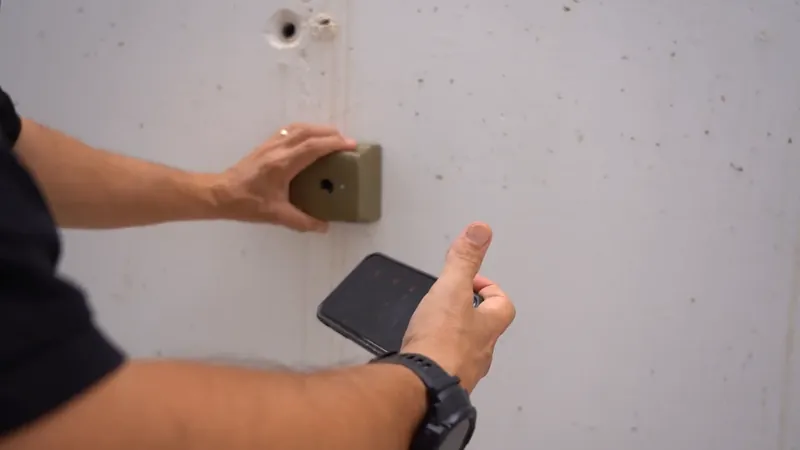
Everyday holes in concrete walls, where a quick first look helps.
Try the job in 3D
A post-tensioned slab. The deeper spots are PT ducts, and the lesson is to stop and call, whoever is holding the drill.
One situation from the Scan lab, which has all eleven.
How pros do it
- Start with the drawings. Structural drawings specify the PT design, tendon layout, anchor schedules and stressing records1. Keep them where contractors can see them.
- Ask for a scan that covers the work. Require a scan of the actual hole and the clearance the work needs2.
- Moved hole, new scan. Stop work: a scan of the old spot does not automatically clear the new location2.
- Agree who carries the risk. One forum member says he has put the responsibility entirely on a coring contractor3.
From the trade sources listed below, opened 16 November 2026. They describe professional practice in general, mostly with GPR, not Eagle XR.
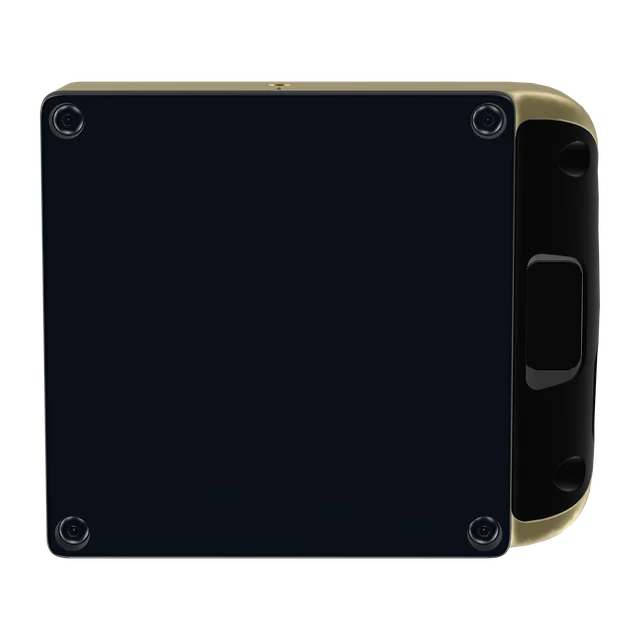
This side goes flat on the surface.
Where Eagle XR fits
- Screening Eagle lists facility managers among its users and names every retrofit or repair as a time to use it4: a quick look for the in-house team before small fixings.
- Scans are saved, synced and shareable4, and you can screenshot one, mark it up and send it to the team5: a picture with the permit, so you see what the contractor saw.
- The iPhone app is free5, and the scanner pairs with the phone you already carry4.
Where it does not
- Not a GPR: a first look for everyday work, to see whether a spot is clear or whether to call an expert; for investigations, mapping and reports, Screening Eagle points professionals to GPR systems4.
- A PT slab, a core near a structural element, or anything that needs a record stays with the engineer and a scanning professional.
Questions facility managers ask
Can our maintenance team use it without training?App Store listing
Screening Eagle says no expert is needed to read the picture; training needs are not published, and acting on it is still the job. The claim is from the App Store listing5; our guides and the Scan lab are a start.
Can we keep a record of what was scanned?Product page
Yes, as saved scans and screenshots, but a formal report format has not been published.
Will it replace our scanning contractor?Product page
No. Screening Eagle calls Eagle XR the first look, so the experts can focus on the high-value jobs4.
What does it cost compared with hiring a scan?Product page, general
Buying costs more up front, while a hired scan is paid each time. The scanner is CHF 3,950, EUR 4,190, USD 4,830 or GBP 3,590, excluding VAT, import taxes and delivery4. One homeowner paid a couple hundred dollars for a floor scan6, and Penhall calls the cost of a GPR scan before drilling in commercial concrete small1. A scanner makes sense where your team drills often.
We run several buildings. Is there a volume price?Shop, press release
Yes, on request. The shop takes up to 10 scanners online with a quotation for more7; the press release also offers volume deals8.
Where are synced scans stored?Not published
Not published. Ask Screening Eagle before you order if it decides the job for you.
Anything else: search every answer on this site on Before you buy, or ask Screening Eagle directly.
Ready for your own job?
CHF 3,950per scanner, excluding VAT, import taxes and delivery. Ordering happens on Screening Eagle's shop.
Buy in Solar GoldPartner link: we may earn a commission. You pay Screening Eagle's normal price.
- Sold and shipped by Screening Eagle
- Same price in all four finishes
- Card, Apple Pay or Google Pay
- Express shipping from Switzerland. US orders ship from Pennsylvania
Sources
- Penhall, Post-Tension vs Rebar: How to Tell What You're Dealing With Before You Drill, read 16 November 2026, penhall.com
- Associated Builders and Contractors, Central Texas chapter, GPR Concrete Scanning Before the Core Drill Starts, read 16 November 2026, abccentraltexas.org
- Mike Holt's Forum, thread "Are there conduits in that concrete?", read 16 November 2026, forums.mikeholt.com
- Screening Eagle, Eagle XR product page and FAQ, read 15 November 2026, xr.screeningeagle.com
- Apple App Store, Eagle XR listing by Screening Eagle Technologies AG, read 15 November 2026, apps.apple.com
- The Garage Journal forum, Rebar detector, read 16 November 2026, garagejournal.com
- Screening Eagle, official Eagle XR shop and return policy, read 14 November 2026, store.screeningeagle.com
- Screening Eagle, Eagle XR launch press release, 17 September 2026, screeningeagle.com