Home inspector tools: what the standards require and what inspectors carry
A home inspection is visual by design. The standards ask for trained eyes, a written report and a few simple tools, and they treat most instruments as optional extras.
Before you pack for a home inspection
Stop and call a structural engineer if
- a crack runs in a straight line with rust staining
- the client wants an opinion on whether the structure is adequate
- the client needs a measured cover or a documented scan
The short version of this page. The details and sources follow below.
From Home inspector tools: what the standards require and what inspectors carry: drillclear.com/guides/home-inspector-tools, where every step has its sources.

What are the inspection tools of an inspector?
A small kit does most of the work: a flashlight, a ladder, an outlet tester, a screwdriver and a voltage tester. Many add a moisture meter. One long-serving ASHI member suggests this basic set for new inspectors: a multi-tip screwdriver, a non-contact voltage tester, a three-prong GFCI outlet tester, a quality flashlight with a back-up, a ladder, pliers and a utility knife1.
He names sight, smell, touch and sound as the tools that matter most, and would discourage advanced tools and testers at first, because infrared cameras, circuit testers and drones can distract the inspector from the work at hand1.
What do home inspection standards actually require?
A visual inspection and a written report, not a fixed list of instruments. The ASHI Standard of Practice, effective 1 March 2014, asks the inspector to inspect "readily accessible, visually observable, installed systems and components". Inspections under it are not technically exhaustive: ASHI uses that term for an investigation that makes extensive use of advanced techniques, measurements, instruments, testing, calculations or other means2.
State rules can be more specific. The Texas Real Estate Commission's standards require reasonable and appropriate tools, then say an inspection does not require specialized equipment, and list thermal imaging equipment, moisture meters, gas or carbon monoxide detection equipment, elevation determination devices, ladders that reach surfaces more than one story above the ground, sewer cameras and drones. An inspector who offers more, including specialized equipment, must have the competency to do so3.
Texas does ask for some electrical testing. The inspector reports deficiencies in 125 volt receptacles by checking for power, correct polarity and the presence of grounding, and reports ground-fault circuit interrupter protection devices that fail to operate3. A plug-in receptacle tester with a GFCI button is commonly used for those checks, though a simple tester cannot prove the wiring is safe.
What are the major things home inspectors look for?
The systems their standard lists. ASHI's standard has sections for structural components, exterior, roofing, plumbing, electrical, heating, air conditioning, interiors, insulation and ventilation, and fireplaces and fuel-burning appliances. For each, the report names what is not functioning properly, significantly deficient, unsafe, or near the end of its service life2.
For the structure, the ASHI inspector inspects structural components including the foundation and framing, and describes the foundation, floor, walls, ceiling and roof structure. The inspector is not required to provide engineering or architectural services or analysis, or to offer an opinion about the adequacy of structural systems and components2. Texas goes a step further: the inspector shall "render a written opinion as to the performance of the foundation"3.
Property surveyor: what do they do?
In the UK, a surveyor inspects a home and reports on its condition, at a level the client chooses. RICS describes three levels of home survey. Level 1 gives traffic light ratings of condition. Level 2 adds a more extensive inspection, and advice on repairs and ongoing maintenance. Level 3 suits a large, older or run-down property, an unusual or altered building, or planned major works. A lender's valuation is something else, and RICS says it is not a survey4.
Like a US home inspection, the survey has limits. For Level 2, RICS says the surveyor does not force or open up the fabric of the building, and uses equipment such as a damp meter, binoculars and a torch. A ladder is used "for flat roofs and for hatches no more than 3m above level ground (outside) or floor surfaces (inside) if it is safe to do so"5.
Building inspector tool kit: the RICS checklist
RICS publishes an equipment checklist for home surveys, as supporting information only. Its standard equipment for all levels: 10x binoculars, a ladder at least 4 m long so it reaches 1 m above a 3 m hatch, a strong magnet, a tape and a laser measure, a millimetre ruler, and a crack gauge ruler where the job needs it. Then an electronic moisture meter, a torch, a crowbar for drain covers, a spirit level, a pocket mirror, a plumb bob, a compass, a digital camera and protective clothing6.
Its specialist list includes a thermal imaging camera, a borescope, a drone, an endoscope, a hygrometer and a metal detector. One rule covers all of it: the surveyor needs adequate training and competence6.
Home inspector tools list
Each common tool has its own job, and some appear in a standard or checklist.
| Tool | What it is for | Named by |
|---|---|---|
| Flashlight and a spare | Attics, crawlspaces, cupboards, under sinks | ASHI member1, RICS standard6 |
| Ladder | Roofs and hatches | RICS: hatches up to 3 m5 |
| Receptacle and GFCI tester | Polarity, grounding, GFCI trip | Texas checks3 |
| Non-contact voltage tester | A first check for live parts | ASHI member1 |
| Moisture meter | Damp in walls and floors | RICS standard6 |
| Binoculars, spirit level, tape, crack gauge | Roofs from the ground, sloping floors, crack widths | RICS standard6 |
| Thermal camera, drone | Surface temperature patterns, roofs | RICS specialist6 |
| Metal detector | Metal near the surface | RICS specialist6 |
Add batteries, a camera, protective clothing and a dust mask, and adjust the kit to your standard, your state or country and your agreement with the client.
Can a thermal camera or a moisture meter see inside a wall?
No, a thermal camera reads surface temperature, and a moisture meter reads moisture in the material it is used on. FLIR, a thermal camera maker, answers: "No, thermal cameras cannot see through walls, at least not like in the movies". What the camera shows is a temperature pattern on the surface, such as studs that are colder than the insulation. On concrete, FLIR says a camera might be able to detect something inside, like a pipe or radiant heating7, because the warm pipe heats the surface above it.
Steel bars, cold pipes and dead cables at the temperature of the slab give the camera little to see. A moisture meter needs care too: RICS asks surveyors to calibrate it every time they use it6.
Home inspection and concrete: what you can see from the surface
Cracks, spalling, rust stains and uneven slabs. The IAEA calls visual inspection an essential precursor to any planned non-destructive test. For a visual survey it suggests tools such as measuring tapes, binoculars, borescopes and a good camera, and calls a crack width microscope or gauge useful8.
Not every crack means the same thing. Crazing, the fine map pattern on many slabs, only extends through the surface layer and causes no later deterioration of the concrete, according to the IAEA. Corrosion is different: rust takes up more room than steel, which can make the concrete above the affected bars spall off8. A crack that runs in a straight line with rust staining is worth a note and a referral.
What the surface does not show: where the bars are, how deep they sit, whether the slab is post-tensioned, and whether there are voids underneath. See drilling into a post-tensioned slab, voids under a concrete slab and how deep is rebar. An ordinary stud finder is of little help on concrete, and a metal mode only finds metal near the surface: see do stud finders work on concrete.
Where a concrete scanner fits in an inspector's kit
As an optional extra for a quick look, not as part of the standard inspection. No standard above requires one, and the RICS checklist names no concrete scanner or cover meter236.
Eagle XR is one such tool: a pocket-size concrete scanner that pairs with your phone and shows rebar, cables, plastic pipes and air voids in color at their depth, plus the back of the element, with a stated depth in concrete of 40 cm9. Its App Store listing also names PT ducts, and lists concrete, drywall and masonry11; the product page says Eagle Intelligence is trained on concrete and learning more materials9. It scans one line at a time, in one direction. Scans are saved, synced and shareable9, and the listing describes taking a screenshot, marking it up on your phone and sending it to the team11.
Screening Eagle places it in its own range between Profometer for precision cover and Proceq GPR for deep structural investigation, as "the quick look in between"10. For an inspector, that means a first look at a crack line, a garage slab or a test spot, with a picture to discuss with the engineer. The scanner costs CHF 3,950, EUR 4,190, USD 4,830 or GBP 3,590, excluding VAT, import taxes and delivery9.
Where it does not fit
Wherever the client needs a measured result, a formal report, or a cause.
- It is not a survey. Screening Eagle says Eagle XR is not a GPR but a first look for everyday work: "For investigations, mapping and reports, professionals use GPR systems such as Proceq's"9.
- Accuracy is not published. Neither are depth accuracy, bar size or a formal report format. Do not report a measured cover from it. See concrete cover surveys.
- It does not tell you why. A picture of bars under a crack is not a cause. ASHI's inspector is not required to offer an opinion on structural adequacy2; that stays with the engineer.
- It is not on the maker's list for your trade. Screening Eagle's list of who Eagle XR is built for names engineers, architects, facility managers and others, not inspectors9. Check your standard, your agreement and your insurance before you offer scanning.
For how the tools compare, read GPR, wall detector or pocket scanner and how to read a concrete scan. Inspectors and surveyors have their own page on concrete scanning for inspectors and surveyors.
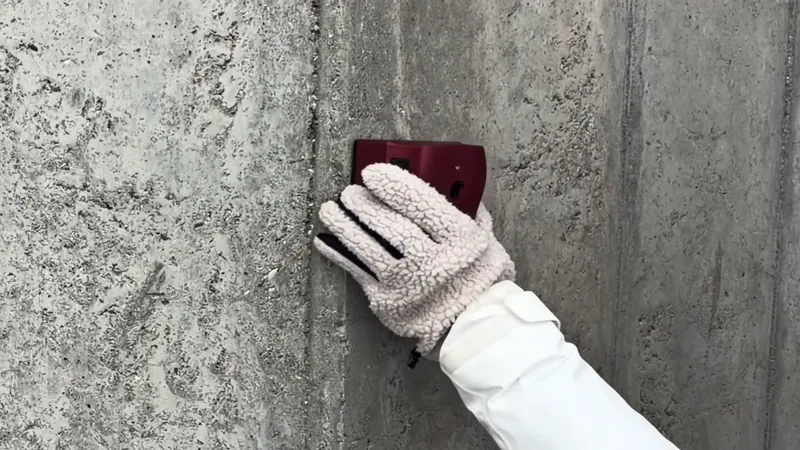
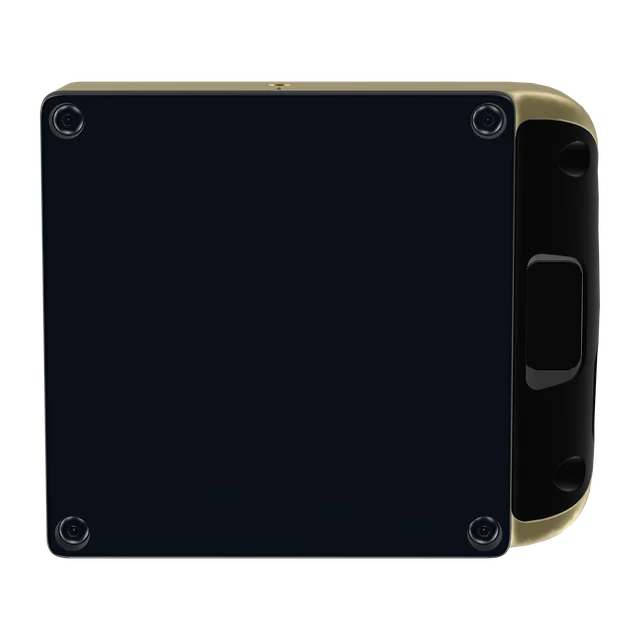
This side goes flat on the surface.
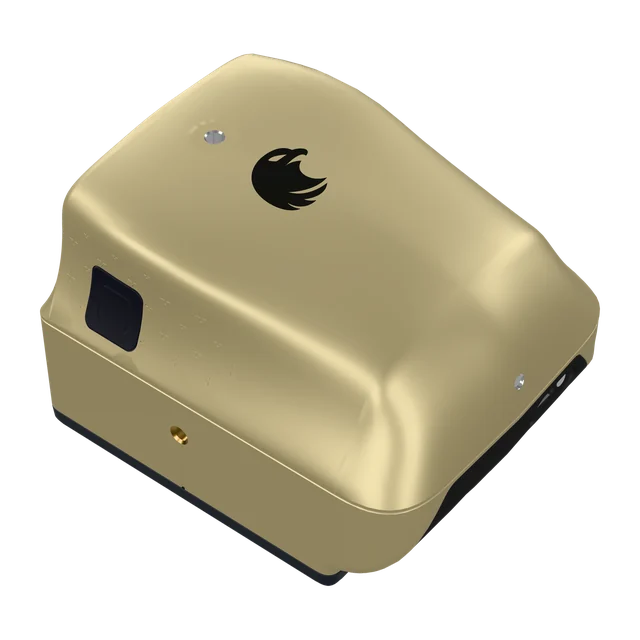
Want to see inside before the next hole?
Eagle XR is a pocket concrete scanner that pairs with your phone and shows rebar, cables, plastic pipes and air voids at their depth. Stated depth in concrete: up to 40 cm. CHF 3,950 excluding VAT, import taxes and delivery.
Buy in Solar GoldPartner link: we may earn a commission. You pay Screening Eagle's normal price.
- Sold and shipped by Screening Eagle
- Same price in all four finishes
- Card, Apple Pay or Google Pay
- Express shipping from Switzerland. US orders ship from Pennsylvania
Sources
- ASHI Reporter, Tools For Home Inspectors: What to Try and Why, 1 July 2020, section An ASHI Member's Perspective (Robert Kulakowski), read 17 November 2026, www.homeinspector.org
- American Society of Home Inspectors, ASHI Standard of Practice for Home Inspections, effective 1 March 2014, read 17 November 2026, www.homeinspector.org
- Texas Real Estate Commission, Standards of Practice, 22 TAC 535.227 to 535.233, online version, read 17 November 2026, www.trec.texas.gov
- RICS, Consumer guide: RICS Home surveys, read 17 November 2026, rics.org
- RICS, Description of the RICS Home Survey Level 2, read 17 November 2026, www.rics.org
- RICS, Home surveys: Equipment checklist, read 17 November 2026, rics.org
- Teledyne FLIR, Can Thermal Imaging See Through Walls? And Other Common Questions, read 17 November 2026, www.flir.com
- IAEA, Guidebook on non-destructive testing of concrete structures, Training Course Series No. 17 (2002), sections 1, 2 and 9, read 17 November 2026, www-pub.iaea.org
- Screening Eagle, Eagle XR product page and FAQ, read 17 November 2026, xr.screeningeagle.com
- Screening Eagle, Eagle XR launch press release, 17 September 2026, read 17 November 2026, www.screeningeagle.com
- Apple App Store, Eagle XR listing by Screening Eagle Technologies AG, read 17 November 2026, apps.apple.com