Drilling into a post-tensioned slab: what to do first
Before you drill a post-tensioned slab, the job changes owner. It becomes the engineer's and the scanning specialist's, and the driller's part is to stop and ask.
Before anyone drills a post-tensioned slab
Stop and call the engineer of record if
- nobody can rule out that the slab is post-tensioned
- the engineer has not said where and how to drill
- the bit shows any sign of steel
The short version of this page. The details and sources follow below.
From Drilling into a post-tensioned slab: what to do first: drillclear.com/guides/post-tensioned-slabs, where every step has its sources.
Short version. If a slab might be post-tensioned, do not drill, core or cut it until the engineer of record, or the building's own procedure, says where and how. A missing sign does not mean missing tendons.
What makes these slabs different
The steel tendons in these slabs are pulled tight after the concrete hardens, so each one carries a large force and stores a lot of energy. A tendon is one or more strands in a sheath, holding the slab in compression. Industry sources put the pull on a single tendon in a typical residential slab somewhere between about 20,000 and 33,000 lb12, which is roughly 9 to 15 tonnes of force (our conversion).
That stored energy is the hazard. Writing in Fire Engineering, Francis Brannigan warned that "cutting a tendon with a torch or core drill can release a tendon, which could whip around and kill anyone in its path"3. STRUCTURE magazine notes that the force released by a cut tendon may cause it to break through its grout cap, and that a cut tendon should not be left untensioned without consulting an engineer4. A structural engineer in the Journal of Light Construction adds the second problem: cutting a tendon weakens the slab5.
How to tell if a slab is post-tensioned
Check four clues: anchor pockets, stamps, the building type and the drawings.
- Anchor pockets at the slab edge. The tendons are anchored in pockets at the edges of the slab15, which usually show as rows of small round patches, about 2 in across6. Landscaping or finishes can hide them.
- Stamps or signs. Many PT slabs are stamped to warn owners and contractors1. Do not count on one: a request to require placards on post-tensioned buildings was rejected3.
- Building type. Parking garages and mid-rise buildings are common uses4. House slabs on ground can be post-tensioned too, and the International Residential Code, where it is adopted, requires those to be designed to the Post-Tensioning Institute's standard7.
- Drawings. Structural drawings show it, but tendon positions on them can be off by several inches6.
If you cannot rule it out, treat the slab as post-tensioned.
Where the tendons are
Tendons do not sit at one fixed depth you can assume. In suspended slabs and beams they are draped: the Post-Tensioning Institute describes the strands as at the top of the beam over the support and near the bottom at mid span8. In residential slabs on ground they are typically spaced on a 3 or 4 ft grid and centred in the thickness of the slab5. Depth also varies with the slab and the contractor9, so no rule of thumb gives a safe drilling depth.
Before anyone drills
Stop, bring in the engineer of record, and have a qualified operator scan the area.
- Stop and report to whoever is responsible for the building that the slab is, or may be, post-tensioned.
- Let the engineer decide whether a penetration is possible and where.
- Have the area scanned by a qualified operator. GPR is the usual method before coring4. Practitioners use high-frequency antennas, 1,600 MHz or higher, to locate ducts, because shop and as-built drawings are often not accurate enough10. X-ray is the alternative where both sides are accessible, at higher cost and with the area cleared6.
- Mark tendons and keep clear of them. The clearance comes from the engineer, not from this page.
- Stop at any sign of steel until the engineer has looked at it.
The Post-Tensioning Institute publishes design and construction standards. We could not find a public PTI procedure for drilling into existing slabs, so we do not quote one.
Where a pocket scanner fits
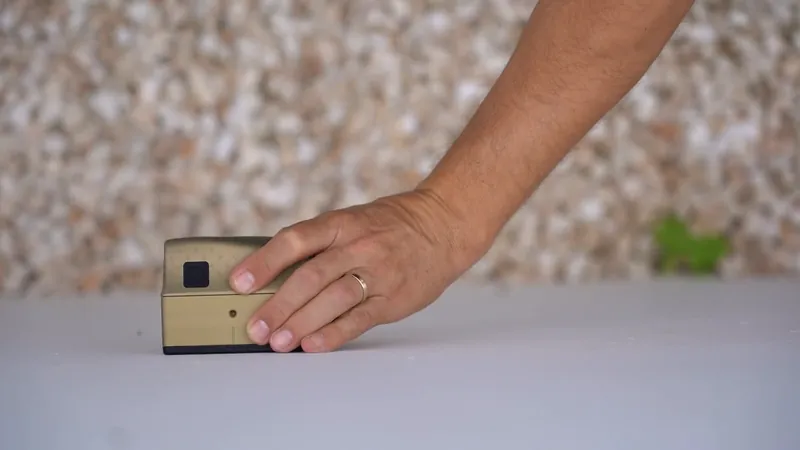
On a post-tensioned slab, use a pocket scanner to understand what is there and to recheck marks, never as clearance to drill. Screening Eagle's launch announcement lists tendons among the things Eagle XR detects11. Its product page lists rebar, cables, plastic pipes and voids, and its FAQ says Eagle XR is not a GPR and does not replace an expert12.
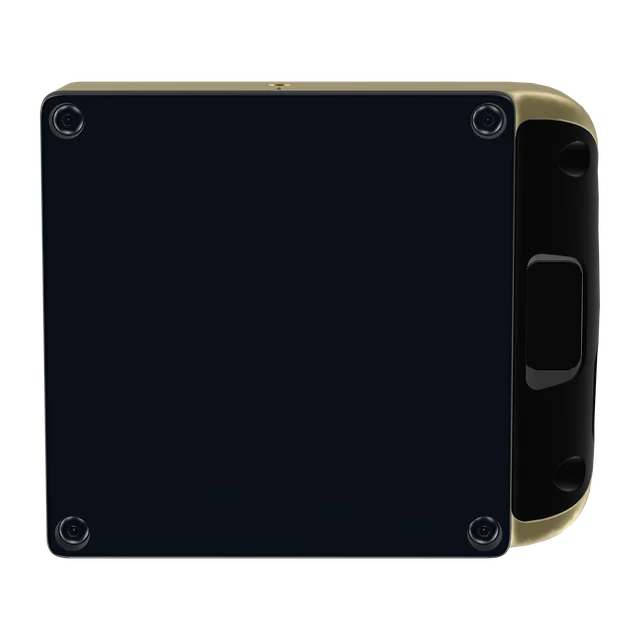
This side goes flat on the surface.
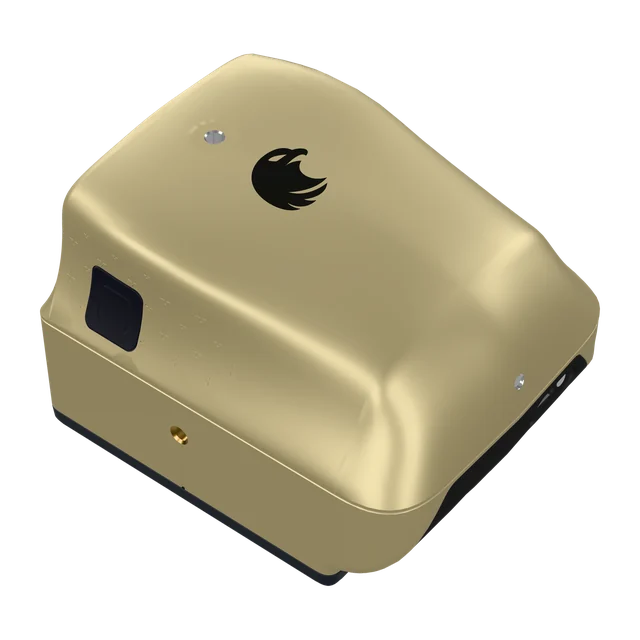
Want to see inside before the next hole?
Eagle XR is a pocket concrete scanner that pairs with your phone and shows rebar, cables, plastic pipes and air voids at their depth. Stated depth in concrete: up to 40 cm. CHF 3,950 excluding VAT, import taxes and delivery.
Buy in Solar GoldPartner link: we may earn a commission. You pay Screening Eagle's normal price.
- Sold and shipped by Screening Eagle
- Same price in all four finishes
- Card, Apple Pay or Google Pay
- Express shipping from Switzerland. US orders ship from Pennsylvania
Sources
- ConcreteNetwork, Post-tension basics, www.concretenetwork.com
- US patent 6425212, tendon force in slab-on-ground construction (secondary), patents.google.com
- Francis L. Brannigan, Fire Engineering, Post-tensioned concrete cutting hazards, 1999, www.fireengineering.com
- Michael Schwager, STRUCTURE magazine, Post-tensioned concrete construction, www.structuremag.org
- Brian Allred, S.E., Journal of Light Construction, Adding a point load to a post-tensioned foundation, 2012, www.jlconline.com
- Plumbing and Mechanical, Defusing the bomb, 2002, pmmag.com
- International Residential Code R506.2, as adopted in the 2025 California Residential Code, gocodebook.com
- Post-Tensioning Institute, EDC-130 Introduction to post-tensioned concrete, post-tensioning.org
- CMC, The importance of understanding the depth of post-tension cables, www.cmc.com
- Fisk, PTI Journal, July 2019, www.post-tensioning.org
- Screening Eagle, Eagle XR launch press release, 17 September 2026, www.screeningeagle.com
- Screening Eagle, Eagle XR product page and FAQ, read 3 November 2026, xr.screeningeagle.com