Voids under a concrete slab: causes, signs, how they are found and fixed
A void under a slab is a gap between the concrete and the ground it should rest on. Some are harmless. Some mean the slab has lost its support, or that a pipe under it is leaking.
Before you fix a hollow or sinking slab
Stop and call a structural engineer if
- cracks or slopes keep growing
- load-bearing walls crack
- the slab may be post-tensioned
- you plan to core or saw-cut the slab
The short version of this page. The details and sources follow below.
From Voids under a concrete slab: causes, signs, how they are found and fixed: drillclear.com/guides/voids-under-concrete-slab, where every step has its sources.
What causes voids under concrete slabs?
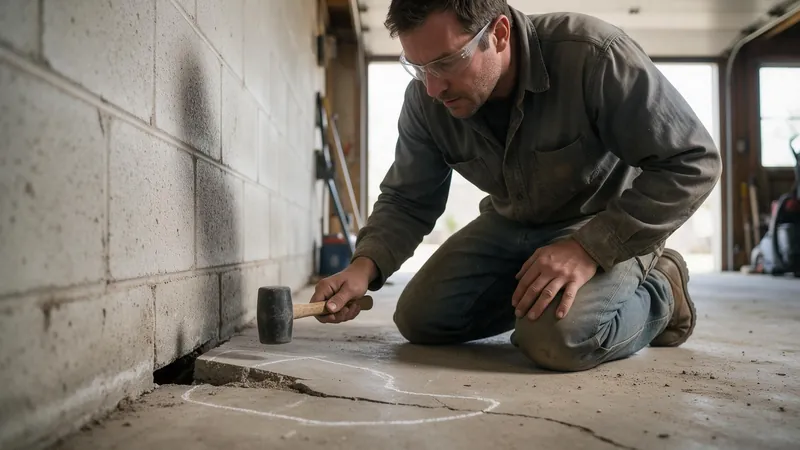
Mostly the ground leaving the slab. Geobear, a contractor that fills such voids, says fill under a ground-bearing slab that is not packed down correctly stays loose and prone to movement, and settles away from the concrete2. Geobear also names leaking pipes and sub-grade erosion as causes3.
A documented case shows the mechanism. In a Christchurch house, the Canterbury earthquakes caused liquefaction, and the ground surface settled by about 100 to 200 mm. The house stood on piles, and voids formed at various places under the ground-bearing slab. The firm managing the repair reported that they came from settlement of the hardfill beneath the slab1.
Gaps and holes in a concrete slab: in it or under it?
They are two different things: a void under the slab is missing ground, while a void in the slab is a defect in the concrete. That can be an air pocket, honeycombing or a delamination. The US Federal Highway Administration (FHWA) lists both kinds for its test methods: impulse response for voids below concrete slabs and at joints, as well as debonding, delamination and honeycombing4, and GPR for voids and delaminations inside concrete members5. A visible crack or hole at the surface can be a symptom of either, or of neither.
Signs of a void under a slab
A floor that drops or becomes uneven, cracks, and a hollow sound when you tap it. Geobear calls a floor slab that drops or becomes uneven the most common symptom of settling fill, along with cracking in floor tiles, slabs and load-bearing walls2. In the Christchurch case, the fill moving away from the slab caused drumminess1.
On concrete roads, engineers watch for faulting, pumping of water and fines, and movement you can see under truck loads6. Indoors, a leak under the slab may show first on the water meter: with all water use off, a moving dial means you have a leak8.
A hollow sound tells you where to look, not how big the void is. In the Christchurch house, the real void depth turned out to be greater than the radar survey had indicated1.
How do professionals find voids under a slab?
With ground penetrating radar, with impulse-response testing, and by drilling or cutting into the slab to confirm. Each has limits:
- GPR. In the Christchurch case, a consulting firm's GPR floor survey identified the voids1. The FHWA notes two limits: voids are "detectable only if they contain significant air pockets or are filled with water", and running GPR and reading the data takes extensive training and experience5.
- Impulse response. An instrumented hammer strikes the surface, and a geophone at a nearby spot measures the dynamic response. The practice is ASTM C1740. Its limits, per the FHWA: small defects may go undetected, the result depends on where the test points are, and large areas take a long time4.
- Deflection testing. On pavements, a falling weight deflectometer simulates a truck axle and measures edge deflections to estimate where voids are6.
- Opening up. A survey tells you where to look. A hole or a core shows what is there.
How these tools compare in general is in GPR, wall detector or pocket scanner.
How to locate pipes under a concrete slab
Start with the drawings and the places where pipes come up through the floor, then trace between them with a locator or a scan.
- The visible ends. Toilets, sinks, floor drains, cleanout caps, the stop tap and the heating manifold show where runs start and end, not the route between.
- Drains and plastic ducts. A transmitting sonde, pushed along the pipe on rods, lets a receiver above trace non-metallic sewers, drains, ducts or pipes, and locate blockages or collapses. Radiodetection's FlexiTrace rod goes into pipes as small as 12 mm9.
- Plastic water pipes. Some locators send a pressure wave down the water. Radiodetection's leaflet for one warns: "Locating may be reduced when the pipe runs under pavement or concrete"10.
- Leaks. Close the main shut-off and watch the meter. If the dial stops, the Saving Water Partnership says the leak is inside the house8: on the house side of the valve, which can include pipes under the slab. Then call a plumber.
- Radar. A scan from above can show pipes in the slab and, depending on depth, materials and contrast, below it. For heating loops and plastic pipe, read how to find plastic pipes, and try the floor and trench cases in the Scan lab.
What fixes exist for voids under a concrete slab?
Three, broadly: fill the void through holes in the slab, raise the slab while filling, or remove the slab, fill and recast. If water is still washing soil away, fix that first, or a filled void can open again.
- Filling, also called undersealing. The Missouri Department of Transportation describes it as filling voids below the surface and eliminating slab movement, without raising the slab6. The FHWA's grout guidance warns that a grout that is too wet "will not have enough strength to support the slab", and its injection holes are generally no more than 50 mm across7.
- Slab jacking. Raising a sunken slab while filling under it. Missouri allows cementitious grout or high-density polyurethane, and says a slab should not be raised more than 1/4 in at a time at any one hole, or the risk of cracking is too great6.
- Resin injection. Geobear injects a geopolymer resin through small holes, which it says expands to between 3 and 40 times its liquid volume3. That is a contractor's own claim.
- Break out and recast. In the Christchurch house, substantial parts of the slab were removed, the voids filled with pourable grout, and new sections of slab cast1.
Each of these means drilling, cutting or breaking the slab. Find out what is in it first: see how to drill into concrete safely and, for a post-tensioned slab, drilling into a post-tensioned slab.
When is a void under a slab structural?
When the slab, or the walls on it, rely on the ground for support and that support is gone, or when the movement continues. Whether that applies to your floor is a structural engineer's judgement.
The Christchurch case shows why it depends on the design. The slab was designed to span between piles, so the firm managing the repair argued that the drumminess was not a critical structural weakness in the slab itself, and sought engineering advice once the extent of the voids was discovered. The determination did not accept that the slab carried only gravity loads, and still found the repair compliant, finding no evidence of ongoing settlement1.
Get an engineer when cracks or slopes keep growing, when load-bearing walls crack (Geobear lists both2), when the slab may be post-tensioned, or before you core or saw-cut. The core drilling checklist covers the hour before a cut.
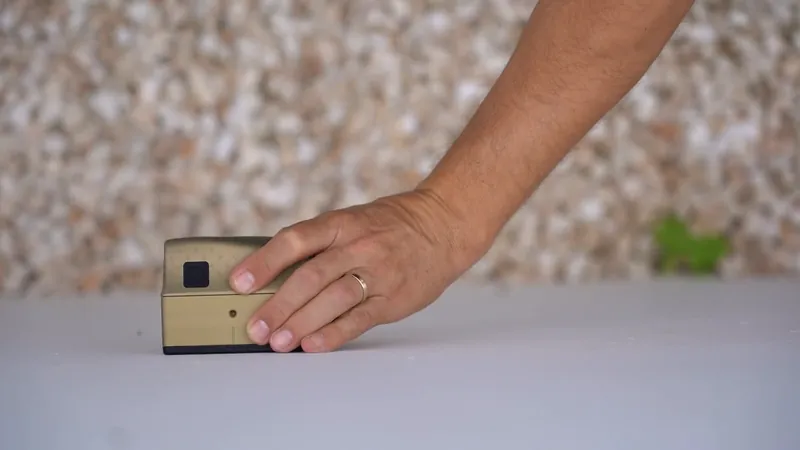
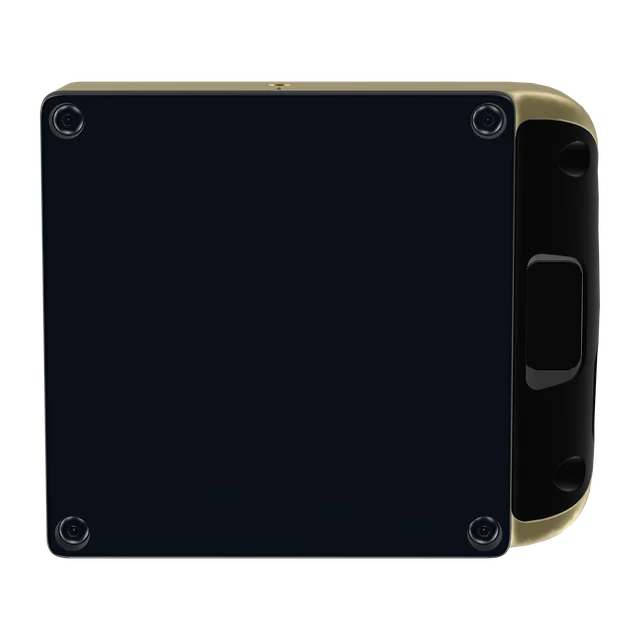
This side goes flat on the surface.
Can Eagle XR find voids under a slab?
Screening Eagle lists voids among what Eagle XR shows, but has not published whether it shows a gap between a ground slab and the soil. Its product page lists rebar, cables, plastic pipes and air voids, shown in color at their depth, plus the back of the element, and gives 40 cm as its depth in concrete11. Its App Store listing names voids and cavities12. The smallest void it shows and its depth accuracy are not published either.
It pairs with your phone and scans one line at a time, in one direction, so covering a floor takes several lines, some at right angles to the others. Screening Eagle calls it a first look for everyday work and adds: "For investigations, mapping and reports, professionals use GPR systems such as Proceq's"11. A suspected void under a slab is an investigation. See how to use Eagle XR and how to read a concrete scan.
Want to see inside before the next hole?
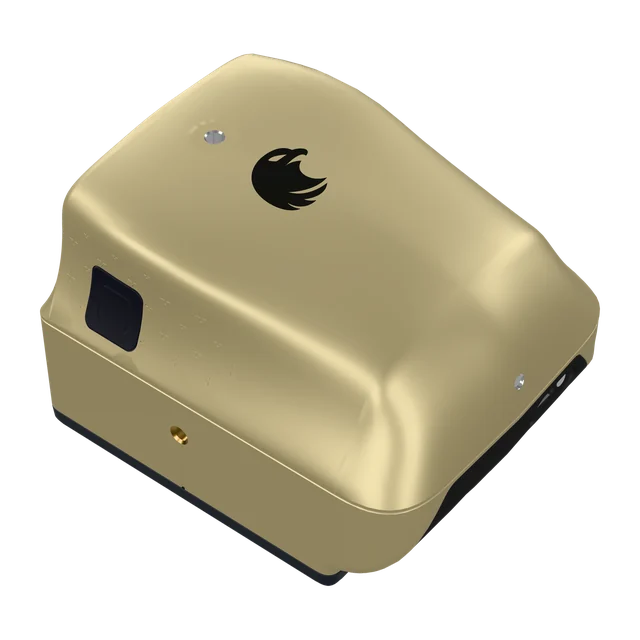
Eagle XR is a pocket concrete scanner that pairs with your phone and shows rebar, cables, plastic pipes and air voids at their depth. Stated depth in concrete: up to 40 cm. CHF 3,950 excluding VAT, import taxes and delivery.
Buy in Solar GoldPartner link: we may earn a commission. You pay Screening Eagle's normal price.
- Sold and shipped by Screening Eagle
- Same price in all four finishes
- Card, Apple Pay or Google Pay
- Express shipping from Switzerland. US orders ship from Pennsylvania
Sources
- New Zealand Ministry of Business, Innovation and Employment, Determination 2015/016: repairs to a foundation slab of a house in St Martins, Christchurch, 29 April 2015, read 17 November 2026, www.building.govt.nz
- Geobear (ground engineering contractor), What is poorly compacted fill settlement?, read 17 November 2026, www.geobear.com
- Geobear (ground engineering contractor), Sinking floors, read 17 November 2026, www.geobear.com
- US Federal Highway Administration, InfoTechnology: Pavements, Impulse Response (IR), read 17 November 2026, infotechnology.fhwa.dot.gov
- US Federal Highway Administration, InfoTechnology: Tunnel, Ground Penetrating Radar (GPR), read 17 November 2026, infotechnology.fhwa.dot.gov
- Missouri Department of Transportation, Engineering Policy Guide, Category 625 Slab Stabilization, read 17 November 2026, epg.modot.org
- US Federal Highway Administration, Fly Ash Facts for Highway Engineers, Chapter 9: Fly ash in grouts for pavement subsealing, read 17 November 2026, www.fhwa.dot.gov
- Saving Water Partnership (19 water utilities in King and Snohomish counties, Washington), Use your water meter to check for leaks, read 17 November 2026, www.savingwater.org
- Radiodetection, Sondes for tracing drains, ducts and other applications, user guide, copy hosted by Tester, read 17 November 2026, tester.co.uk
- Radiodetection, RD500 plastic water pipe locator, product leaflet, read 17 November 2026, radiodetection.com
- Screening Eagle, Eagle XR product page and FAQ, read 17 November 2026, xr.screeningeagle.com
- Apple App Store, Eagle XR listing by Screening Eagle Technologies AG, read 17 November 2026, apps.apple.com