Drilling into a concrete wall or ceiling in a condo or apartment
In a condo or an apartment, the concrete around you is rarely yours alone. Your ceiling is often the floor of the unit above, the wall may be your neighbour's wall too, and the slab may hold steel tendons under high tension.
Before you drill in a condo or apartment
Stop and call the building's engineer if
- the slab is post-tensioned, or nobody can say whether it is
- you want a hole through a slab or wall, a core, or a chase
- the fixing carries a person or a moving load, such as a swing chair
- the bit hits steel, or the hole turns wet
The short version of this page. The details and sources follow below.
From Drilling into a concrete wall or ceiling in a condo or apartment: drillclear.com/guides/drilling-into-concrete-in-a-condo-or-apartment, where every step has its sources.

Can you drill into a concrete wall in a condo or apartment?
Often yes, for small fixings, but the building's rules come first and some buildings forbid it. In British Columbia, the standard strata bylaws say an owner "must obtain the written approval of the strata corporation" before an alteration to a strata lot that involves the structure of a building, and the same goes for an alteration to common property1. One Chicago condominium's remodeling rules allow no drilling or trenching into the concrete slab at all2. A shelf plug and a cored hole are very different jobs, and your building's rules say where the line falls.
HOA, strata and landlord rules: what to read first
Owners read the building's rules, tenants read their lease, and both ask before touching walls or slabs that may be common property.
Owners: the declaration, bylaws or house rules, and any renovation or alteration policy. Tenants: ask the landlord in writing, saying what you want to fix, where, and how many holes.
When can you drill? Noise hours
Whenever your building's rules say. Drilling noise carries through the structure to the units around you. BC's standard bylaws forbid using a strata lot in a way that causes unreasonable noise1. The Chicago rules allow work only from 8:30 a.m. to 5:00 p.m. on weekdays, limit Saturdays to painting and wallpapering, and allow no work on Sundays or holidays2. Ask the manager for your building's hours, and tell your neighbours.
Is my condo slab post-tensioned?
Ask, and do not guess from the look of it. A post-tensioned (PT) slab holds steel tendons pulled tight after the concrete hardens. The Concrete Network says the cables are pulled to 33,000 pounds, that a cut tendon is very difficult to repair, and that the thing to remember is "not to cut or drill into post-tensioned concrete slabs"3. Tendons are often draped, low at the midpoint of a beam and high at the supports3, so they come closest to the underside, your ceiling, away from the columns. The drawings show the intended layout, and an engineer may need to check it on site.
The Canadian Condominium Institute's Toronto chapter calls it crucial to avoid drilling or coring a PT slab without precise knowledge of where the cables are, and says a condominium board in a PT building should remind owners of this risk from time to time4. If nobody can tell you whether your slab is PT, treat it as PT. How to tell is in drilling into a post-tensioned slab; precast plank floors have their own rules: see hollowcore and precast floors.
Can you drill into a concrete ceiling in a condo or apartment?
Only once you know what is in it, and to the depth the building allows. A concrete ceiling is the underside of a structural slab, and can hold rebar, tendons and the conduits that feed your ceiling lights. The CCI article says some nominal drilling may be permitted, but the corporation will need a structural engineer to define the maximum depth that can be drilled without risking damage to the cables4.
Hilti, asked how far an anchor in the underside of a PT slab must stay from the tendons, answered "there is no exact value". It said knowing the distance from the surface to the strands is important, and that engineers try to keep embedment away from them5. So the depth comes from the building's engineer, using the drawings, scan results and what else is known, not from a rule of thumb.
Drill a hook into a concrete ceiling: lights, hooks and swing chairs
Use the existing light point where you can, and treat anything that swings as a structural fixing.
- A new ceiling light point may need a new cable route: a job for an electrician and the building.
- A hook for a plant or a lamp needs an anchor rated for the load, within the depth the building allows. Ask for that depth before you choose the anchor.
- A swing chair, punch bag or baby bouncer can put larger and changing forces on the anchor than a still load. Ask the building's engineer first.
See the ceiling situation in 3D for how cast-in objects sit at different depths.
Why a nicked tendon matters years later
A damaged tendon does not always fail on the day. A paper in the PTI Journal describes a Chicago condominium association whose garage ceiling dropped a piece of concrete onto a parked car, breaking its rear window, when a tendon burst out of the slab. The investigation traced it to tendon damage from earlier concrete repairs that were not meant to affect the tendons: the damaged sheathing let in water, and the strands corroded and broke6. Writing in STRUCTURE magazine, Michael Schwager notes that the force released by a cut tendon may make it break through its grout cap7.
Neighbours' services and party walls
A wall between two units can have services on either side. In UK wiring rules, where a socket's position can be seen from the reverse side of a wall less than 100 mm thick, its cable zone extends to that side too8. The HSE's advice is to look on both sides of walls9.
Floors work the same way: a deep hole down into your floor can reach towards the ceiling of the unit below, with its lights and their conduits. In England and Wales, the party wall booklet counts structures that separate parts of buildings approached by separate staircases or entrances, such as flats, as party structures. It lists drilling to fix plugs and screws for ordinary wall units or shelving among works that may be too minor to need a notice, and says the key point is any consequence for the structural strength10.
When to stop and ask the building's engineer
Stop and ask before you drill whenever the structure, the rules or the bit give you a reason.
That means a PT slab or one nobody can vouch for; a hole through, a core or a chase; a person or moving load, such as a pull-up bar, on the fixing; rules that call for approval, a scan or an engineer; or a bit that hits steel or a hole that turns wet (read hitting rebar while drilling). Where the board requires a scan, the CCI article says an experienced engineer should oversee it, and warns that X-rays require evacuating several floors4. See X-ray concrete scanning and the core drilling checklist.
What a scan can and cannot settle
A scan shows what the scanner detects along the line you scanned, and it can miss things. It does not give you permission, and on a PT slab the engineer decides, whatever any scanner shows.
For a shelf or a TV on a wall you are allowed to drill, a first look helps. Eagle XR pairs with your phone and shows rebar, cables, plastic pipes and air voids in color at their depth11. Its App Store listing names PT ducts among what it detects, and says you can take a screenshot, mark it up on your phone and send it to the team12: useful when the building manager asks what you found. It scans one line at a time, in one direction. Screening Eagle calls it "a first look for everyday work", not a GPR, and says it does not replace an expert11.
For one or two holes in a rented flat, a pocket scanner is a lot of money. Asking the building, or hiring a firm the building already uses, may be the better call: see rent, hire or buy and renovators and homeowners.

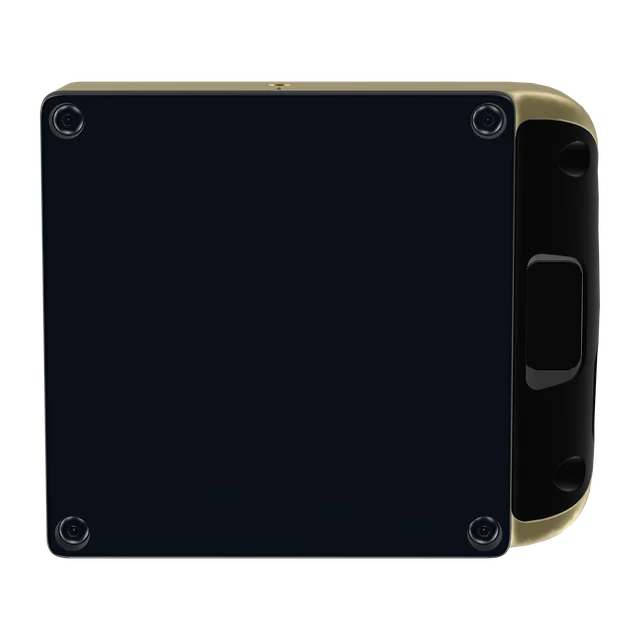
This side goes flat on the surface.
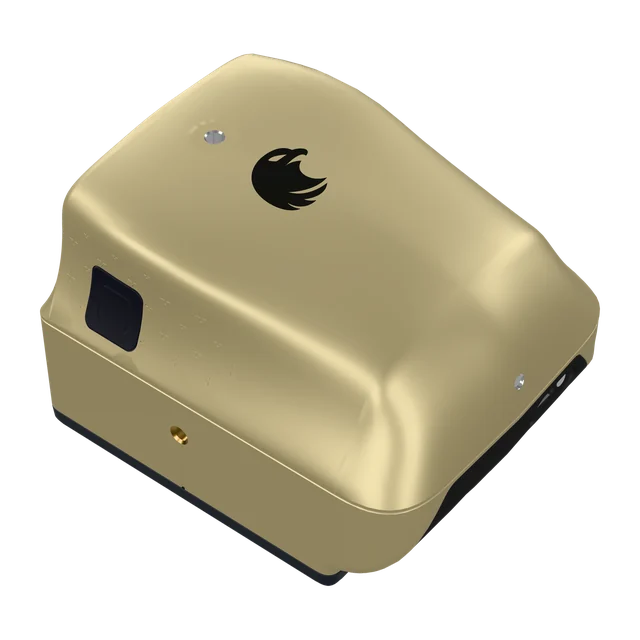
Want to see inside before the next hole?
Eagle XR is a pocket concrete scanner that pairs with your phone and shows rebar, cables, plastic pipes and air voids at their depth. Stated depth in concrete: up to 40 cm. CHF 3,950 excluding VAT, import taxes and delivery.
Buy in Solar GoldPartner link: we may earn a commission. You pay Screening Eagle's normal price.
- Sold and shipped by Screening Eagle
- Same price in all four finishes
- Card, Apple Pay or Google Pay
- Express shipping from Switzerland. US orders ship from Pennsylvania
Sources
- Province of British Columbia, Strata Property Act, Schedule of Standard Bylaws, sections 3, 5 and 6, read 17 November 2026, www.bclaws.gov.bc.ca
- Newberry Plaza Condominium Association, Chicago, Remodeling and Construction Rules and Guidelines, revised June 2024, read 17 November 2026, 1030north.com
- The Concrete Network, Post-Tension Basics: How Post-Tensioned Slabs Are Built, read 17 November 2026, www.concretenetwork.com
- Canadian Condominium Institute, Toronto and Area Chapter, Post-Tensioning, by Sally Thompson and Michael New, Condovoice Fall 2024, 26 November 2024, read 17 November 2026, cci.ca
- Hilti, Engineering question: Expansion anchors into underside of (E) PT slab, read 17 November 2026, www.hilti.com
- Tracy R. Naso, A stitch in time saves nine: a PT repair case study, PTI Journal, December 2017, authorized reprint, read 17 November 2026, www.post-tensioning.org
- Michael Schwager, Post-Tensioned Concrete Construction, STRUCTURE magazine, read 17 November 2026, www.structuremag.org
- NICEIC in Professional Electrician, Why contractors need to apply due diligence when installing cables embedded in thin walls or partitions, 14 August 2023, read 17 November 2026, professional-electrician.com
- UK Health and Safety Executive, Work near electricity, read 17 November 2026, www.hse.gov.uk
- UK Government, The Party Wall etc Act 1996: explanatory booklet, published 12 May 2016, read 17 November 2026, www.gov.uk
- Screening Eagle, Eagle XR product page and FAQ, read 17 November 2026, xr.screeningeagle.com
- Apple App Store, Eagle XR listing by Screening Eagle Technologies AG, read 17 November 2026, apps.apple.com