Concrete cover surveys: how a covermeter survey works and what the report shows
A cover survey measures how much concrete protects the steel, at many points, and says how sure the numbers are. It is a measurement job with a calibrated instrument and a written report.
Before you run or order a cover survey
Stop and call the engineer if
- a bar size seems to differ from the design
- calibration needs test holes the client has not approved
- the bars are congested, deep or in a second layer the meter cannot read
The short version of this page. The details and sources follow below.
From Concrete cover surveys: how a covermeter survey works and what the report shows: drillclear.com/guides/concrete-cover-survey, where every step has its sources.
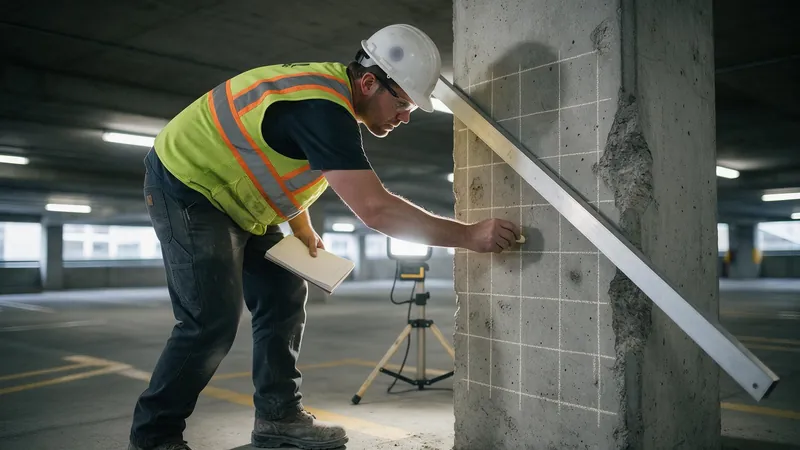
What is a concrete cover survey?
A survey that locates the bars, measures the concrete cover over them at many points, and compares the results with the design cover. The usual tool is an electromagnetic cover meter, also called a covermeter or pachometer. The IAEA lists covermeter testing among the standard methods, used to measure how far steel bars sit beneath the concrete surface, and possibly their diameter1.
The IAEA names the usual reasons for one: quality control after concrete placement, investigating members whose records are missing or need checking, and finding bars before other tests, such as extracting cores1.
Why cover matters
Cover protects the steel from corrosion and fire. Screening Eagle, which makes the Profometer cover meter, writes that cover is a protective barrier against moisture, chlorides and carbon dioxide, which trigger corrosion of the rebar2. When that barrier fails, rust takes up more room than the steel, which can make the concrete above the affected bars spall off1. For fire, the Concrete Centre notes that under Eurocode 2, fire resistance works on axis distance, measured to the centre of the main bars3.
What is nominal cover in concrete?
Nominal cover is the cover shown on the drawings: the minimum the design needs, plus an allowance for deviations during construction. For Eurocode 2, the Concrete Centre lists three reasons for cover: bond, durability and fire. An allowance for deviation, usually 10 mm, is added to the largest of the three to get the nominal cover3.
So a reading a little below nominal can still meet the minimum; whether it is accepted depends on the project specification. Readings below the minimum are what a survey looks for. US practice handles deviation as a tolerance on the specified cover instead. In a presentation hosted by ACI, a 9 inch elevated slab example gives the reinforcement cover tolerance as -3/8 in, citing ACI 117, section 2.2.24.
Concrete cover for structural members
It depends on the member, its exposure and the code. Slabs, walls, beams and columns, indoor or outdoor, against soil or near salt, each get their own values. Our guide how deep is rebar has the ACI 318 and Eurocode 2 tables; this guide is about measuring what was built.
How does a cover meter work?
It sends a magnetic field into the concrete and measures how steel disturbs it. The IAEA describes two types: eddy current instruments, which react to any conducting metal, and magnetic induction instruments, which are less sensitive to non-magnetic materials. The orientation and distance of the bar both change the reading, so the meter finds a bar and its direction1.
Cover and bar size are tied together. The IAEA puts it this way: with the bar size known, the cover can be measured, and with the cover known, the bar size can be estimated1. The US Federal Highway Administration (FHWA) gives the practical rule: when both are unknown, "the operator must assume a value for one (usually the rebar size)"5.
How is a covermeter survey done?
Read the drawings, check the meter, traverse systematically, measure along each bar, and calibrate on site where needed.
The IAEA asks the engineer to study all relevant structural drawings before any visual test, and calls for regular checks on the covermeter to establish its accuracy. Move the search head systematically across the concrete, and rotate it over each bar to the strongest signal. Then measure cover along each bar, with the bar size known or assumed; below about 20 mm, some instruments need a 20 mm spacer of wood or plastic, with 20 mm taken off the reading. For site calibration, the IAEA describes drilling a few test holes to bars, measuring the real depth with a depth gauge, and building a calibration curve, taking care not to damage the reinforcement1. Drill only where the client has approved it. Projecting bars can be used to check the meter too.
Columns and beams need care. For the thin ties in a column, Screening Eagle's method is to place the meter between two longitudinal bars and sweep parallel to the ties2.
What limits a cover meter?
Close bars, deep bars and other metal. The FHWA lists these limits for magnetic methods on bridges5:
- "For a concrete cover estimate to be accurate, the parallel rebar spacing must be 1.5 times greater than the concrete cover."
- Only the first layer of reinforcing steel can be located and sized.
- It is only effective within the top 4 inches of the concrete surface. Ranges vary by instrument: Screening Eagle states up to 185 mm cover measuring depth for the PM80006.
- It is ineffective where reinforcing steel is congested.
The IAEA adds laps, second layers, tie wires, bar supports, rough surfaces and nearby steel such as scaffolding. For bar size, it says accuracy claims range from ±2% to ±15%, and that a bar size may only be reliably estimated to within one bar size. Before reporting a bar size that differs from the design, it advises exposing the bar to confirm it1.
Accuracy decides the verdict near the limit. Screening Eagle gives an example: with a specified cover of 50 mm and a reading of 50 mm, an accuracy of ±5 mm means the real cover could be only 45 mm2. For the PM8000 it states an accuracy of ±1 mm (0.04 in) to ±4 mm (0.16 in), depending on depth6. Those are the maker's figures.
Where does GPR come in?
For deeper bars, larger areas and non-metallic objects. The FHWA lists measuring concrete cover and mapping the rebar layout among GPR's uses on bridges. Radar measures travel time, and moisture changes the wave speed, so depth needs calibration: the FHWA calls it desirable to calibrate results with cores or drill holes from the concrete surface to the top of a selected bar7.
The FHWA also notes that survey lines should run perpendicular to the top reinforcement, and that the lower half of a deck can be difficult because of the rebar mat in the upper half7.
Covermeter survey standards
Three documents come up most. BS 1881-204:1988, still listed as current by BSI, covers covermeters for estimating the position, depth and size of reinforcement buried in concrete, the accuracy to be expected, and the factors that may influence the results8. ACI PRC-228.2-13 reviews test methods including magnetic, electrical and radar methods, and has a section on reporting results, 4.59. DGZfP B 02, December 2025, covers locating reinforcement and measuring cover; its contents include personnel qualifications and minimum requirements for documentation10.
The full list, with utility documents such as PAS 128, is in concrete scanning standards.
What clients get in a cover survey report
Measured covers on a drawing or grid, bar positions and spacing, statistics against the required cover, and the method and limits behind the numbers.
Software now does much of the layout. Screening Eagle's Profometer PM8000 offers line scans, area scans on the Pro model exported as DXF files for reporting, statistics with a concrete cover threshold slider, DBV (Deutscher Beton- und Bautechnik-Verein) advanced statistics, percentages of cover values under the threshold, and CSV export6. When you order or review a report, look for:
- the instrument, its check before use and any site calibration1
- a drawing of where each line or area was measured
- the bar size used for each reading, and whether it was assumed or checked by exposing the bar15
- the specified or minimum cover the results are compared with, and how many readings fall below it, and where
- what the method may have missed, such as second layers, congested zones and deep bars
Cover depth survey or first look: where a pocket scanner fits
Before the survey, not in place of it. Eagle XR shows rebar and other objects in color at their depth, with a stated depth in concrete of 40 cm11. Screening Eagle places it between Profometer for precision cover and Proceq GPR for deep structural investigation, as "the quick look in between"12. It has not published depth accuracy or bar sizing for Eagle XR.
It can give a first look: what reinforcement shows, roughly where those bars are, whether a second layer shows, roughly how thick the element is where the back of the element shows11, and where the cover meter or a core should go. Screening Eagle's FAQ is plain about the rest: "For investigations, mapping and reports, professionals use GPR systems such as Proceq's"11.
For the tools side by side, read GPR, wall detector or pocket scanner. For why depth on a radar picture is always an estimate, read how to read a concrete scan. For the specs, see the Eagle XR fact sheet and the scanner comparison.
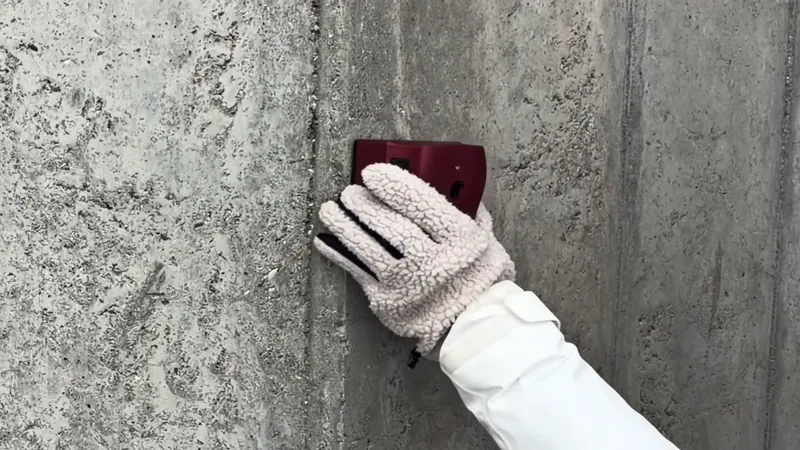
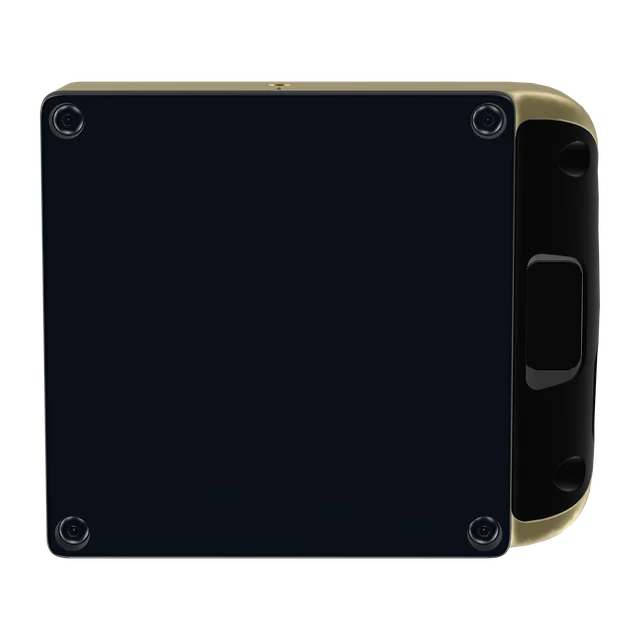
This side goes flat on the surface.
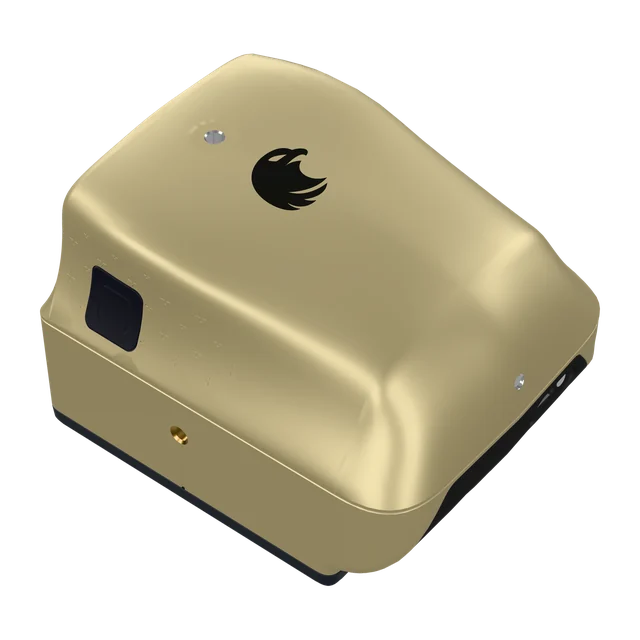
Want to see inside before the next hole?
Eagle XR is a pocket concrete scanner that pairs with your phone and shows rebar, cables, plastic pipes and air voids at their depth. Stated depth in concrete: up to 40 cm. CHF 3,950 excluding VAT, import taxes and delivery.
Buy in Solar GoldPartner link: we may earn a commission. You pay Screening Eagle's normal price.
- Sold and shipped by Screening Eagle
- Same price in all four finishes
- Card, Apple Pay or Google Pay
- Express shipping from Switzerland. US orders ship from Pennsylvania
Sources
- IAEA, Guidebook on non-destructive testing of concrete structures, Training Course Series No. 17 (2002), sections 1, 2 and 9, read 17 November 2026, www-pub.iaea.org
- Screening Eagle Tech Hub, application note: Measure 1st Layer Rebar Cover with Maximum Precision, read 17 November 2026, www.screeningeagle.com
- The Concrete Centre, Eurocode 2 FAQs, question 11: How do I work out the appropriate concrete cover?, read 17 November 2026, www.concretecentre.com
- American Concrete Institute, Understanding ACI 117 Construction Tolerances and Tools, presentation by Michael Ahern, 4 April 2023, read 17 November 2026, www.concrete.org
- US Federal Highway Administration, InfoTechnology, Bridge: Magnetometer (MM), read 17 November 2026, infotechnology.fhwa.dot.gov
- Screening Eagle, Profometer PM8000 product page and technical specifications, read 17 November 2026, www.screeningeagle.com
- US Federal Highway Administration, InfoTechnology, Bridge: GPR (Locating Reinforcement), read 17 November 2026, infotechnology.fhwa.dot.gov
- BSI Knowledge, BS 1881-204:1988 Testing concrete: Recommendations on the use of electromagnetic covermeters, read 17 November 2026, knowledge.bsigroup.com
- American Concrete Institute, store page for ACI PRC-228.2-13 Report on Nondestructive Test Methods for Evaluation of Concrete in Structures, read 17 November 2026, www.concrete.org
- DGZfP, B02 E 2025 Guideline for Non-Destructive Testing of Concrete Cover and Locating of Reinforcement on Reinforced and Prestressed Concrete Elements, read 17 November 2026, publikationen.dgzfp.de
- Screening Eagle, Eagle XR product page and FAQ, read 17 November 2026, xr.screeningeagle.com
- Screening Eagle, Eagle XR launch press release, 17 September 2026, read 17 November 2026, www.screeningeagle.com