GPR, wall detector or pocket scanner: which one do you need?
They all promise to find things in walls. They do not see the same things, or to the same depth. Here is what each kind of tool is built for, using the manufacturers' own figures.
Before you choose a concrete scanner
Stop and call a qualified GPR operator if
- the slab is post-tensioned, for any penetration
- an engineer needs a documented survey
- you need a whole slab mapped or its thickness measured
The short version of this page. The details and sources follow below.
From GPR, wall detector or pocket scanner: which one do you need?: drillclear.com/guides/gpr-vs-pocket-scanner, where every step has its sources.
The short answer
The right tool depends on the job, and riskier jobs need more. The sensible minimum for each:
| Job | Sensible minimum |
|---|---|
| Picture hooks, shelves or a few anchors in drywall or a thin wall | Multi-detector |
| Anchors in concrete walls and ceilings, as a regular part of your work | Radar wall scanner or pocket scanner such as Eagle XR, which show depth and find plastic as well as metal |
| Cores for pipes and ducts through walls and slabs | Radar scanner, scanned across and down, plus engineer sign-off |
| Finding plastic pipes or underfloor heating | Radar-type scanner. Multi-detectors are built mainly for metal and live wires. |
| Deep elements, or a documented survey for an engineer | GPR system and an experienced operator, or X-ray |
| Post-tensioned slab, any penetration | Qualified GPR scan or X-ray, under the building's procedure |
| Cover survey for durability | Cover meter |
What manufacturers state
Stated depths are best-case figures, usually for dry concrete. Site conditions can cut them sharply, which some manufacturers say outright4.
| Tool | Stated depth in concrete | Finds |
|---|---|---|
| Bosch D-tect 120 Radar detector, spot view | Up to 120 mm, 60 mm live cables1 | Metal, live cables, wood, water-filled plastic pipes |
| Bosch GMS 120 Multi-detector | 120 mm magnetic metal, 80 mm non-magnetic, 50 mm live cables2 | Metal, live wires, wood |
| Hilti PS 300 Ferroscan Cover meter | Up to 200 mm3 | Rebar position, depth and size estimate |
| Bosch D-tect 200 C Radar wall scanner | 200 mm in dry concrete, 60 mm in early-age concrete4 | Metal, live cables, wood |
| Hilti PS 1000 X-Scan Radar wall scanner | Up to 300 mm, objects 40 mm apart5 | Rebar, tendons, metal and plastic conduits, voids |
| Eagle XR Pocket phone scanner | Up to 40 cm6 | Rebar, cables, plastic pipes, air voids, back of element |
| GSSI StructureScan, 1.6 GHz GPR, concrete | Normally 30 to 50 cm7 | Metal and non-metal targets, voids, thickness |
| Proceq GP8800 GPR, concrete | Up to 65 cm, objects 3 cm apart8 | Metal and non-metal targets |
| Proceq GP8000 GPR, deep | Up to 150 cm9 | Deep structural investigation |
Figures from each manufacturer's page or data sheet, checked 3 November 2026. Hilti's New Zealand selection guide gives 400 mm for the PS 1000, against 300 mm on the product page. Check the current data sheet before you buy anything.
Multi-detectors
The familiar handheld detectors find metal and, in most models, live AC wiring. They are cheap and quick. In concrete they reach about 5 to 12 cm depending on the model and the target12, and they give you a beep or a bar graph, not a picture of what is at which depth. The UK's Health and Safety Executive also warns that some cable detectors do not find a wire carrying a small current10.
Cover meters
Cover meters measure steel bars and their cover precisely. Tools such as Screening Eagle's Profometer or Hilti's Ferroscan supply the cover measurements used to check a building against its design or to assess corrosion risk. They are built to find steel, so they do not show plastic pipes or voids.
Radar wall scanners and pocket scanners
Radar-type scanners show metal and non-metal objects at their depth. They send radio pulses into the concrete and draw the echoes as a slice. Wall scanners like the Bosch D-tect 200 C and Hilti PS 1000 do this in a dedicated handheld unit.
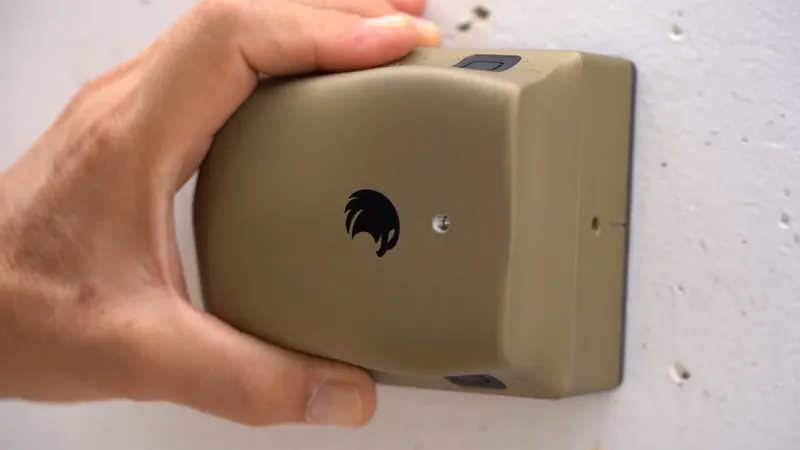
Eagle XR is a 100 by 90 mm, 750 g scanner that pairs with your phone and uses the phone's screen and an app6. Screening Eagle calls its 40 cm reach "two to three times deeper than conventional handheld detectors"11. For scale, 40 cm is 3.3 times the D-tect 120's 120 mm and twice the D-tect 200 C's 200 mm in dry concrete (our arithmetic). Its FAQ says Eagle XR is not a GPR but a first look for everyday work, and that it does not replace an expert6.
GPR systems
Ground penetrating radar for concrete is the same principle with more power, more control and more training behind it. GPR systems are what you use to map a whole slab, find post-tensioning tendons before coring, measure element thickness, or hand an engineer a documented survey. GSSI's handbook adds 25 to 40 cm at 2.0 to 2.6 GHz to the 1.6 GHz figure above, and notes that depth can fall to 15 cm or less in very conductive concrete7.
X-ray
Radiography gives a clear, detailed picture of what is inside a slab. It needs access to both sides13 and a cleared area while it runs, and it is slower and more expensive than radar12.
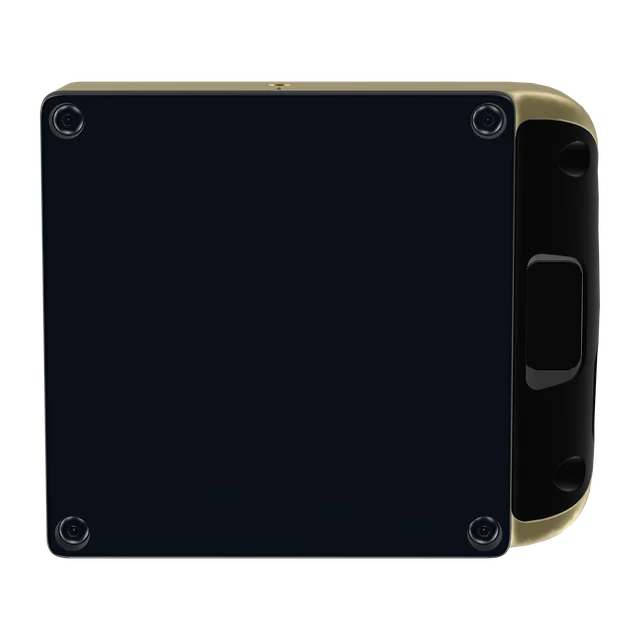
This side goes flat on the surface.
Want to see inside before the next hole?
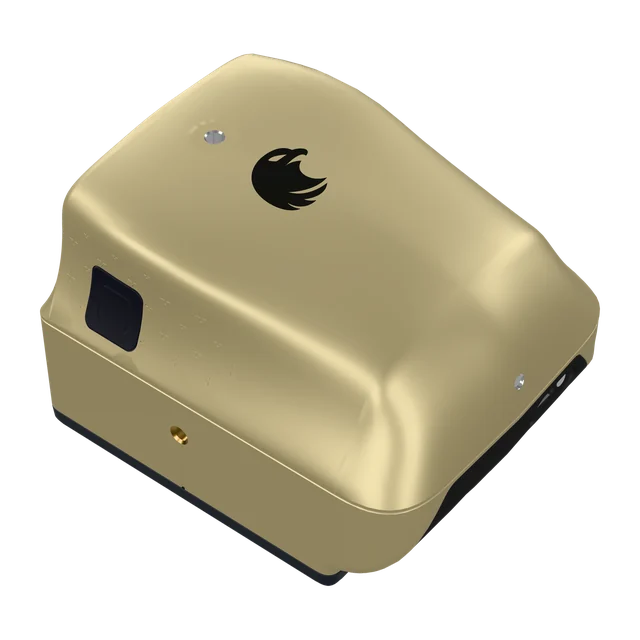
Eagle XR is a pocket concrete scanner that pairs with your phone and shows rebar, cables, plastic pipes and air voids at their depth. Stated depth in concrete: up to 40 cm. CHF 3,950 excluding VAT, import taxes and delivery.
Buy in Solar GoldPartner link: we may earn a commission. You pay Screening Eagle's normal price.
- Sold and shipped by Screening Eagle
- Same price in all four finishes
- Card, Apple Pay or Google Pay
- Express shipping from Switzerland. US orders ship from Pennsylvania
Sources
- Bosch, D-tect 120 specifications, bosch-pt.co.in
- Bosch, GMS 120 data sheet, static.chipdip.ru
- Hilti, PS 300 Ferroscan product page, www.hilti.co.uk
- Bosch, D-tect 200 C wallscanner product page, www.bosch-professional.com
- Hilti, PS 1000 X-Scan product page, www.hilti.com.hk
- Screening Eagle, Eagle XR product page and FAQ, read 3 November 2026, xr.screeningeagle.com
- GSSI, Concrete Handbook MN72-367 Rev H, atecorp.com
- Screening Eagle, Proceq GP8800 product page, www.screeningeagle.com
- Screening Eagle, Proceq GP8000 product page, www.screeningeagle.com
- UK Health and Safety Executive, Work near electricity, www.hse.gov.uk
- Screening Eagle, Eagle XR launch press release, 17 September 2026, www.screeningeagle.com
- Plumbing and Mechanical, Defusing the bomb (GPR and X-ray before coring PT slabs), pmmag.com
- Applied Technical Services (ATS), Concrete X-Ray Services, read 16 November 2026, atslab.com