How to drill into concrete without hitting rebar, cables or pipes
Many strikes happen because someone drilled where they assumed nothing was. The fix is an order of work, and a scanner is only one step of it.
Before you drill into concrete
Stop and call the structural engineer if
- the bit hits steel or a prestress duct
- you plan a core or saw cut through a structural element
- the slab may be post-tensioned
The short version of this page. The details and sources follow below.
From How to drill into concrete without hitting rebar, cables or pipes: drillclear.com/guides/drilling-into-concrete-safely, where every step has its sources.
What is probably in there
Assume there is steel in every wall, slab, beam and column, because almost all structural concrete is reinforced. Depending on the building, you may also find:
- Electrical conduits and cables, cast into walls and slabs, usually running to sockets, switches, ceiling lights and distribution boards.
- Water, heating and drain pipes, often plastic, in floors and in the screed on top of them, including underfloor heating loops.
- Post-tensioning tendons in some slabs and beams: steel strands under very high tension. They need their own procedure, covered in drilling into a post-tensioned slab.
- Voids, honeycombing and old cores that were filled later.
The order of work
Check the paperwork and the surface first, scan and mark next, and drill last.
- Get the drawings, and do not trust them alone. Structural drawings show bar sizes and spacing; electrical and plumbing drawings show intended routes. What was built often differs by a few centimetres, sometimes by a lot, so treat drawings as a reason to look, not as clearance.
- Read the surface. Cables in walls usually run horizontally or vertically from sockets, switches and other accessories1. Floor drains and sinks have pipes. Earlier cores, patches and saw cuts show where somebody already drilled. At slab edges, rows of patched pockets can mean post-tensioning.
- Isolate what you can. Know where concealed power cables and gas pipes are before drilling into walls or floors; if you do not, turn the services off2. Lock off circuits that could be in the way, know where the water stop valve is, and check the other side of the wall too3.
- Scan an area bigger than the hole, across and at 90 degrees. A single pass mainly shows what crosses it, so a bar running along it can sit right under your mark and not show clearly. Scan a grid reaching at least one hand's width beyond the hole on every side.
- Mark what you find on the surface. Mark every bar, cable and pipe, then join the marks into lines. Write the depth next to anything shallow.
- Put the hole in the gap, with clearance. The bit, or for a core the whole core diameter, plus a margin has to fit between the lines. If it does not fit, move the hole, not the rules.
- Get sign-off where it is needed. The effect of a new opening in an existing slab has to be checked4, so cores and saw cuts through structural elements usually need the structural engineer's approval, and many sites require a permit for any penetration.
- Drill, and stop at the first sign of steel. Caltrans tells its crews to stop coring if the bit cuts rebar that is not to be cut, unexpected utilities or prestress ducts5. A hammer drill that suddenly stops advancing, bucks or rings, or a core bit that slows and changes sound, has probably found a bar. Stop and read you hit rebar while drilling: what now.
- Keep a record. A photo of the marks or a saved scan shows later why the hole is where it is.
What each method can find
Each method finds different things, and none finds everything. The detailed comparison is in GPR, wall detector or pocket scanner.
| Method | Finds | Watch out for |
|---|---|---|
| Cover meter | Steel bars and their cover, precisely | Metal only, shallow range, no plastic pipes |
| Handheld wall detector | Metal, studs, often live AC wires | Shallow in concrete; a depth readout only on some models |
| Radar scanner or GPR | Metal, plastic pipes, conduits, voids, slab thickness | Wet or young concrete, dense steel, needs interpretation |
| X-ray (radiography) | A clear, detailed picture of what is inside8 | Needs access to both sides8, a cleared area, more time and money6 |
Where a phone scanner fits
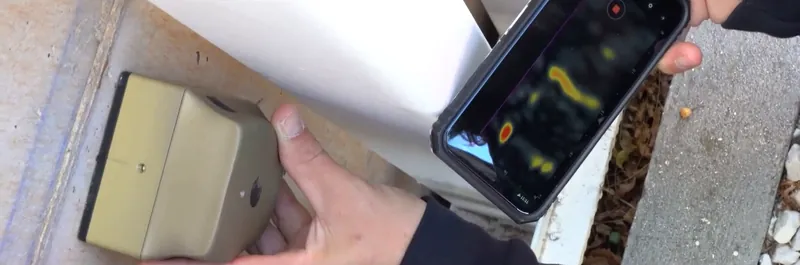
A pocket scanner such as Eagle XR is built for step 4 on every job, not only the big ones. It shows rebar, cables, plastic pipes and air voids at their depth, up to a stated 40 cm, and by the maker's own FAQ it does not replace an expert7. Nor does it replace the engineer's sign-off, a documented GPR survey when one is required, or the procedure for a post-tensioned slab.
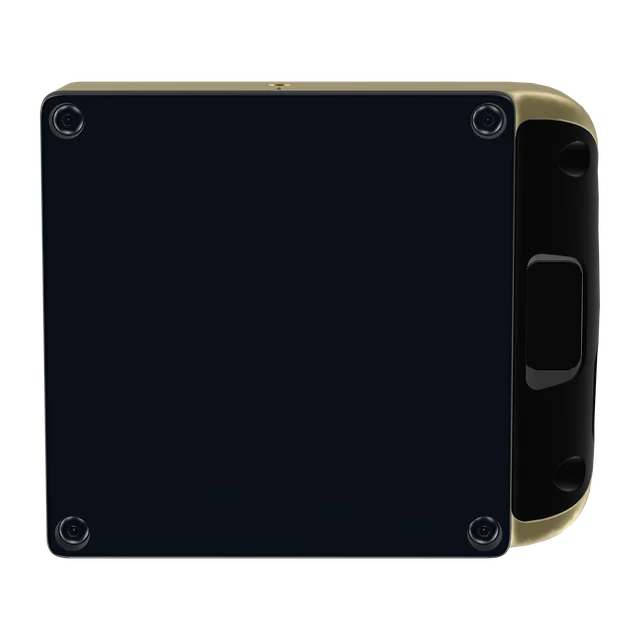
This side goes flat on the surface.
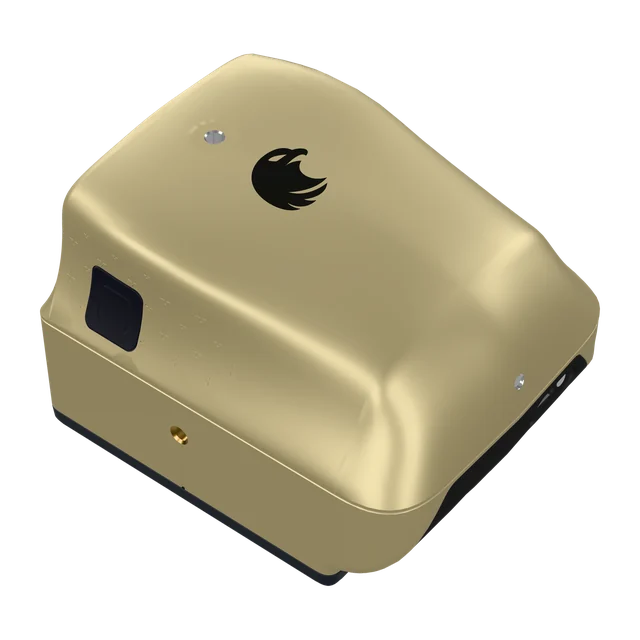
Want to see inside before the next hole?
Eagle XR is a pocket concrete scanner that pairs with your phone and shows rebar, cables, plastic pipes and air voids at their depth. Stated depth in concrete: up to 40 cm. CHF 3,950 excluding VAT, import taxes and delivery.
Buy in Solar GoldPartner link: we may earn a commission. You pay Screening Eagle's normal price.
- Sold and shipped by Screening Eagle
- Same price in all four finishes
- Card, Apple Pay or Google Pay
- Express shipping from Switzerland. US orders ship from Pennsylvania
Sources
- Electrical Safety First, Advice for DIYers, www.electricalsafetyfirst.org.uk
- UK Health and Safety Executive, CIS65 Avoiding concealed services and overhead power lines, www.hse.gov.uk
- UK Health and Safety Executive, Work near electricity, www.hse.gov.uk
- Portland Cement Association, An engineer's guide to openings in concrete floor slabs, structurepoint.org
- Caltrans, Bridge Construction Memo 60-4.04 Coring concrete, 2022, dot.ca.gov
- Plumbing and Mechanical, Defusing the bomb, 2002, pmmag.com
- Screening Eagle, Eagle XR product page and FAQ, read 3 November 2026, xr.screeningeagle.com
- Applied Technical Services (ATS), Concrete X-Ray Services, read 16 November 2026, atslab.com