You hit rebar while drilling. What now?
Stop. Hitting a bar is common and usually harmless. Cutting through it without asking is what turns it into a problem.
Before you carry on after hitting rebar
Stop and call the structural engineer if
- the hole cannot move without cutting the bar
- you are thinking of using a rebar-cutting bit
- there is any chance the slab is post-tensioned
The short version of this page. The details and sources follow below.
From You hit rebar while drilling. What now?: drillclear.com/guides/hit-rebar-while-drilling, where every step has its sources.
How you can tell
The drill stops advancing, and the sound or feel changes.
- Hammer drill: the drill bucks or jams and the sound turns sharp and metallic. The dust may carry bright metal flecks.
- Core drill: progress drops sharply and the slurry can change colour. The core may come out with a cut bar in it.
- Anchor hole that stops a few centimetres in: often steel, but treat it as unknown until you have checked.
Why you stop
You stop because only the structural engineer can say whether that bar may be cut. A cut bar may not matter in a lightly loaded wall, and may matter in a heavily loaded beam or column; you cannot tell which from the front of the wall. The Portland Cement Association's guide says openings in existing slabs should be approached with caution and avoided where possible, and their effect on the structure analysed1. Caltrans stops coring when a bit cuts rebar marked not to be cut, and resumes only once a repair plan is authorised2.
A post-tensioned slab is a different problem. A tendon is one or more steel strands under very high tension, and damaging one can release that energy and weaken the slab. If the slab might be post-tensioned, stop and read drilling into a post-tensioned slab.
What to do next
Find out what you hit, then move the hole rather than cut the bar.
- Stop drilling and do not switch to a rebar-cutting bit. Using one is the engineer's call.
- Find out what you hit. Scan around the hole, across and at 90 degrees, and mark the bar lines. Often the bar runs exactly where the drawing said, and the hole was simply placed on it.
- Move the hole into the gap between the marked lines. For anchors, follow the anchor maker's instructions for abandoned holes; they usually set a minimum distance from the old hole and say how to fill it.
- If the hole cannot move, ask. Send the engineer the position, the bar direction and depth from your scan, and a photo, so they can decide quickly whether the bar can be cut.
- Record it. Note what you hit and where, for the next person who drills there.
If it was not steel
Make it safe first, then call the right trade.
A cable. Stop, let go of the drill if you can do so safely, and do not touch the bit or the hole. Isolate the circuit at the board and lock it off, then call an electrician to make it safe and check the damage. Next time, follow the HSE advice: if you do not know where the cables are, turn the power off before drilling3.
A water or heating pipe. Stop, close the water supply or the heating circuit, and get a plumber. Do not try to plug a pressurised pipe through the hole.
Next time
Scan before every hole, with lines across the spot and at 90 degrees to them. Many hits come from lines in one orientation only, or no scan at all: in the Scan lab, one line across does not clearly show the bars that run along it. No scan is a guarantee, which is why the marks and the clearance matter.
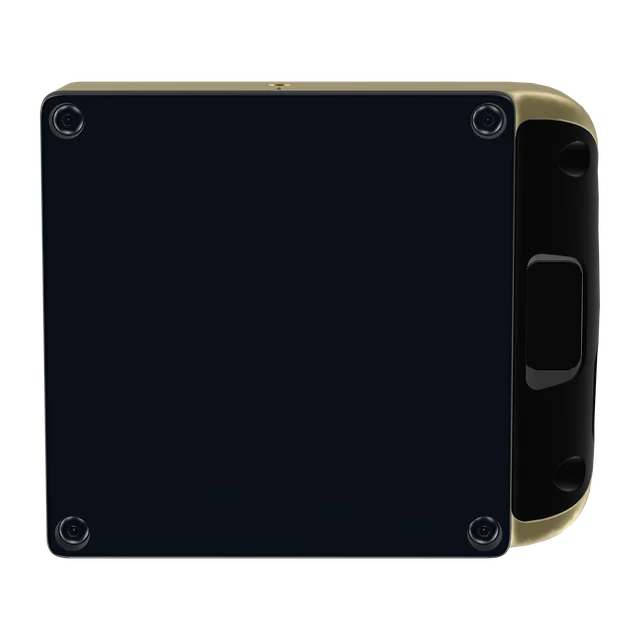
This side goes flat on the surface.
Want to see inside before the next hole?
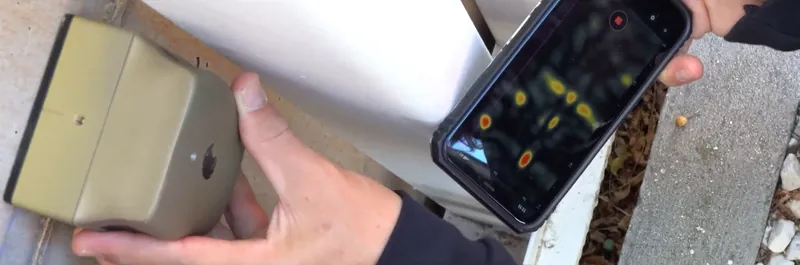
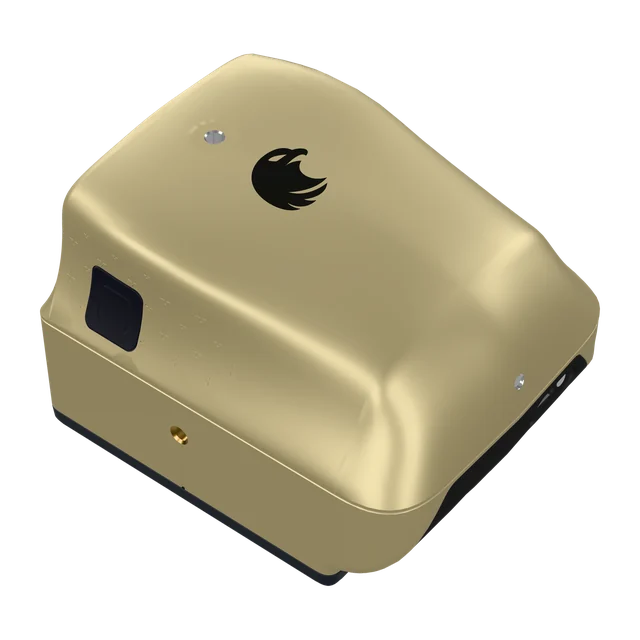
Eagle XR is a pocket concrete scanner that pairs with your phone and shows rebar, cables, plastic pipes and air voids at their depth. Stated depth in concrete: up to 40 cm. CHF 3,950 excluding VAT, import taxes and delivery.
Buy in Solar GoldPartner link: we may earn a commission. You pay Screening Eagle's normal price.
- Sold and shipped by Screening Eagle
- Same price in all four finishes
- Card, Apple Pay or Google Pay
- Express shipping from Switzerland. US orders ship from Pennsylvania
Sources
- Portland Cement Association, An engineer's guide to openings in concrete floor slabs, structurepoint.org
- Caltrans, Bridge Construction Memo 60-4.04 Coring concrete, 2022, dot.ca.gov
- UK Health and Safety Executive, CIS65 Avoiding concealed services and overhead power lines, www.hse.gov.uk