Drilling and scanning fibre-reinforced concrete
Steel fibres are short pieces of steel mixed all through the concrete. They scatter radar, so the bars, ducts and pipes you are looking for are much harder to pick out, and a cover meter reacts to every fibre, not just the bars.
Before you drill into fibre-reinforced concrete
Stop and call the engineer and a scanning specialist if
- the slab is, or might be, post-tensioned
- the scan is cluttered or does not show the back of the slab
- you need to find post-tensioning ducts in the fibre concrete
The short version of this page. The details and sources follow below.
From Drilling and scanning fibre-reinforced concrete: drillclear.com/guides/fibre-reinforced-concrete, where every step has its sources.
What fibre concrete is
Fibre-reinforced concrete has short fibres mixed into it. The Steel Construction Institute names three main types: steel fibres, macro-synthetic fibres and micro-synthetic polymer fibres4.
| Type | What it is | What it does |
|---|---|---|
| Steel fibres | Short pieces of steel. Most common lengths 35 to 60 mm, diameters 0.5 to 1.0 mm4 | Carry load after the concrete cracks, so they can count in structural design4 |
| Macro-synthetic fibres | Usually a blend of polymers, first developed as an alternative to steel fibres in some uses4 | Also carry load after cracking4 |
| Micro-synthetic fibres | Short, thin, chopped polypropylene, typically added at about 0.9 kg/m³, and they can be used along with steel fibres4 | Change the fresh concrete. They are not counted in structural design, and they have been shown to reduce spalling in a fire4 |
Steel fibres lie at random: Screening Eagle calls them small and discontinuous, randomly positioned and oriented5. Hilti gives typical amounts of 25 to 45 kg of steel fibre per cubic metre of concrete6.
Where you will meet it
You will mostly meet it in industrial floors and tunnel linings, and sometimes in slabs on steel deck.
- Industrial floors. Hilti says fibre-reinforced concrete is used extensively in industrial flooring, especially for heavily loaded floors such as high rack warehouses, production halls and logistics centres6.
- Tunnel linings. Screening Eagle names precast tunnel linings and warehouses as uses5. Hilti notes that tunnel concrete with steel fibres sometimes also contains polymer fibres against spalling in a fire6.
- Some slabs on steel deck. The Steel Construction Institute reports growing interest in replacing the mesh with steel fibres in composite slabs on steel decking4. See drilling into a concrete slab on metal deck.
- Precast and other work. Hilti also lists precast factories, thin concrete elements and sprayed concrete6.
Hilti writes that steel fibres may even replace standard bar reinforcement to a certain degree6. But Screening Eagle's application note describes a 500 mm thick fibre slab that still had rebar meshes and several post-tensioning cables5. Fibres do not mean there is nothing else in the slab.
How to tell
Ask for the drawings or the mix, because the surface often will not tell you.
- Ask and read. The drawings, the concrete specification or the delivery notes are the reliable answer. The fibre dose is specified in kg/m³4, so a fibre mix is written down somewhere.
- Look at the surface, but do not treat a clean one as proof. ArcelorMittal, a fibre maker, says single fibres on the surface of a floor cannot be ruled out completely, but good mixing and finishing keep them to an absolute minimum7. The American Concrete Institute calls the effect a "hairy" appearance8.
- Look at edges, cores and broken corners. Where the concrete is cut or broken you see the inside of the mix.
What steel fibres do to radar
Steel fibres scatter radar, so the picture fills with shallow clutter and deeper objects can fade or vanish. Screening Eagle's GPR article calls this a major problem: metal reflects all of the wave energy, so the fibres do not let the waves pass and there is no visual depth penetration9.
Its application note describes radar images of fibre concrete as blurry and fuzzy, with strong reflections near the surface. The fibres also make the concrete conductive, which greatly reduces the contrast between the concrete and a steel duct5. A third Screening Eagle article calls the GPR response erratic, because the waves bounce off the fibres10.
The back of the slab may not show either, and then the scan cannot tell you how thick the slab is.
Cover meters on steel fibre concrete
A cover meter reacts to all metal near its probe, and every fibre is metal. PCTE, an Australian testing equipment supplier, says so in its cover meter procedure11, and goes further: "Metallic coatings or steel fibre reinforcing will completely prevent scanning with radar or cover meter"12. Screening Eagle's note says cover meters do not work well here, because they are designed to find steel rebar in non-conductive surroundings5.
Synthetic fibres
We found no published test of radar or cover meters on concrete with only synthetic fibres. Plastic fibres are not metal, but a mix can combine them with steel fibres, so check the specification before you assume a fibre mix is all plastic.
What to do instead
Plan from the drawings and the mix, and bring in a specialist for the scan.
- Isolate what you can. The UK Health and Safety Executive's advice: if unsure where concealed cables are, "turn the electricity supply off before drilling into walls etc."13. Look at what is around and below the slab: risers, boxes, pipes and floor outlets.
- Treat a post-tensioned slab as a specialist job. Read drilling into a post-tensioned slab first. Steel fibres make it harder, not easier.
- Ask a scanning specialist about the method. For post-tensioning ducts in fibre concrete, Screening Eagle's own answer is ultrasonic pulse echo, not radar. Its note says ultrasonic waves are less good at detecting metal in concrete, but can detect large post-tensioning ducts with little interference from the steel fibres5. That is specialist equipment and interpretation.
- Check that your anchor is approved for fibre concrete. Hilti's brochure lists anchors with European assessments for steel fibre concrete, for example with Group I fibres up to 80 kg/m³6. Ask the anchor maker or the designer which products and loads are covered.
- If you drill anyway, keep to the engineer's zones. Where the drawings show where holes are allowed, that is worth more than a cluttered scan.

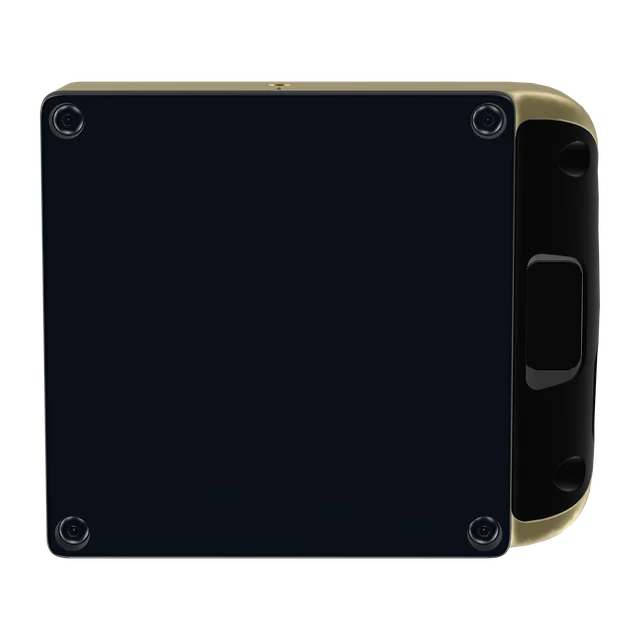
This side goes flat on the surface.
Where Eagle XR fits
How Eagle XR behaves on steel fibre concrete is not published. On 16 November 2026 we read the product page and FAQ, the App Store listing and the launch press release, and none of them mentions fibres123. The App Store listing names concrete (dry, normal or wet), drywall and masonry (brick and block)2, and the product page says Eagle Intelligence is trained on concrete and learning more materials1.
Screening Eagle says the scanner sends electromagnetic waves into the concrete, with Eagle Intelligence turning the reflections into an image, and calls Eagle XR "a first look for everyday work", not a GPR1. We will not guess. On a fibre floor, ask Screening Eagle before you order, and plan the job as if you had no scan.
For what each tool can see in ordinary concrete, read GPR, wall detector or pocket scanner.
Want to see inside before the next hole?
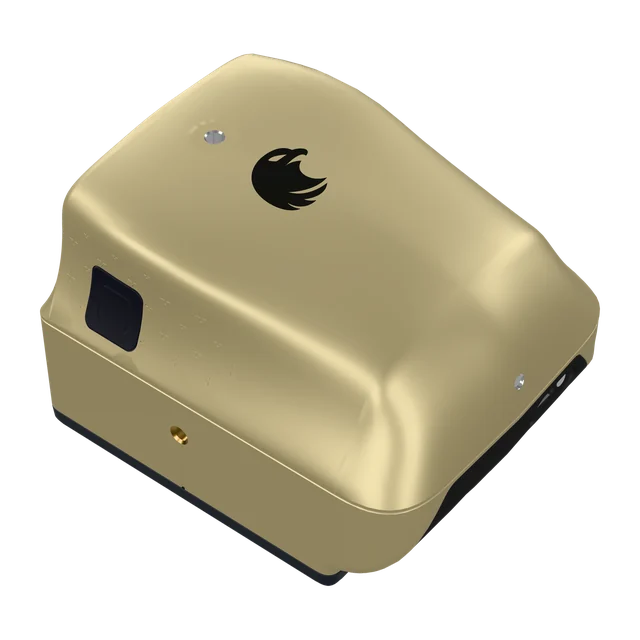
Eagle XR is a pocket concrete scanner that pairs with your phone and shows rebar, cables, plastic pipes and air voids at their depth. Stated depth in concrete: up to 40 cm. CHF 3,950 excluding VAT, import taxes and delivery.
Buy in Solar GoldPartner link: we may earn a commission. You pay Screening Eagle's normal price.
- Sold and shipped by Screening Eagle
- Same price in all four finishes
- Card, Apple Pay or Google Pay
- Express shipping from Switzerland. US orders ship from Pennsylvania
Sources
- Screening Eagle, Eagle XR product page and FAQ, read 16 November 2026, xr.screeningeagle.com
- Apple App Store, Eagle XR listing by Screening Eagle Technologies AG, read 16 November 2026, apps.apple.com
- Screening Eagle, Eagle XR launch press release, 17 September 2026, read 16 November 2026, www.screeningeagle.com
- New Steel Construction (Steel Construction Institute), Use of fibre-reinforced concrete in composite slabs (part 1), January 2023, read 16 November 2026, www.newsteelconstruction.com
- Screening Eagle, application note: Detecting PT Ducts in Steel Fibre Reinforced Concrete (SFRC), read 16 November 2026, www.screeningeagle.com
- Hilti, Anchoring to Steel Fibre-reinforced Concrete: Introduction to Hilti solutions approved for the use in SFRC, version 1.1, July 2024, read 16 November 2026, assets.hilti.com
- ArcelorMittal WireSolutions, Steel fibres: Flooring FAQs, read 16 November 2026, wiresolutions.arcelormittal.com
- American Concrete Institute, Technical question: Will fiber-reinforced concrete have a hairy appearance?, read 16 November 2026, www.concrete.org
- Screening Eagle (Proceq), Uncovering the Hidden Secrets of Concrete: What GPR Can (and Can't) Reveal, read 16 November 2026, www.screeningeagle.com
- Screening Eagle Tech Hub, Evaluating Concrete Using Ultrasonic Tomography, read 16 November 2026, www.screeningeagle.com
- PCTE (Australia), Cover Meter Operation Procedure, read 16 November 2026, www.pcte.com.au
- PCTE (Australia), How to do a Concrete Cover Check, read 16 November 2026, www.pcte.com.au
- UK Health and Safety Executive, CIS65 Avoiding concealed services and overhead power lines, read 16 November 2026, www.hse.gov.uk