Drilling into hollowcore planks and precast floors
A hollowcore plank gets its strength from steel strands that were stretched before the concrete set. Cut one and you weaken the plank. So the rules come from the company that made the floor: a hole goes through a core, and never through a strand without that company's approval.
Before you drill into a hollowcore floor
Stop and call the plank maker or the engineer if
- a hole might cut a prestressing strand
- nobody knows who made the floor
- you need to drill sideways through a plank
- the bit hits steel
The short version of this page. The details and sources follow below.
From Drilling into hollowcore planks and precast floors: drillclear.com/guides/hollow-core-and-precast, where every step has its sources.
What a hollowcore plank is
A hollowcore plank is a precast concrete unit with continuous voids running along its length. UK maker Milbank calls this an efficient lightweight section5. The Concrete Centre says units generally come in standard 1200 mm widths and in depths from 110 mm to 400 mm7. In the United States, Oldcastle makes its Elematic plank 48 inches wide and 8, 10, 12 or 16 inches thick2.
Oldcastle casts the prestressing strands in at the spacing and location that the span, loading and fire cover call for2, so the strand pattern can change from one plank to the next, even on the same floor.
How to tell you are on hollowcore
Look underneath for long, straight joints, and ask for the precast layout drawings. The top may show nothing.
- From below. Joints at a steady spacing, usually the plank width. Milbank notes that standard width units have chamfered edges on the soffit4. The joints are grouted once the planks are laid1.
- From above. A plank floor can carry a topping: the PCI chapter's checklist gives a 3/4 inch leveling coat, or a 2 inch composite or non-composite topping, as examples1.
- On paper. Plank makers draw their own layout. Milbank tells installers to check service holes against its working drawings4.
Where the strands and the cores are
Plank makers give one rule again and again: drill through a core, not through the concrete between cores. Ibstock allows small holes on the centre lines of the hollow cores, taking care not to cut or expose reinforcement3. Oldcastle says the trades have to make sure they drill through the core locations2.
Oldcastle's fire rating checks speak of bottom strand cover, with 3/4 inch needed for 2 hours2, so expect the strands close to the underside. Their exact height is not standard. Hilti's hollowcore anchor table tells installers to check the location and height of the cable with the plank supplier8.
Even the maker may not know exactly: an article by CCANZ, published by PlaceMakers in New Zealand, says the maker may give some guidance, but perhaps not accurate locations6. On complex projects with many openings, Oldcastle can supply a full size template, placed using the grout joints, to help identify every hollow cell and strand in any plank2.
What plank makers allow
It depends on who made the plank: one maker allows 50 mm holes on site, another 6 inches.
| Source | What it says about holes |
|---|---|
| PCI chapter FAQ (US) | Small openings are typically core drilled on site by the trade after the planks are laid and grouted. Their size and place should go to the precaster at shop drawing stage. "Please do NOT cut prestressing strand in the plank without the approval of the hollowcore manufacturer."1 |
| Oldcastle, Elematic (US) | Isolated core-drilled openings of 6 inches diameter or less can go anywhere except at a free plank edge. The maker approves all other openings before cutting. Several openings close together are best in a line parallel to the span, so that one strand is cut in several places rather than several strands. Planks take more openings near the supports than in the middle third2. |
| Ibstock (UK) | Holes up to 50 mm may be drilled on site on the core centre lines, at no closer than 400 mm centres each way. Larger holes are formed in the factory3. |
| Milbank (UK) | Holes and cut-outs are generally formed during manufacture4. |
If nobody knows who made the floor, the New Zealand guidance says not to cut through an existing precast floor without consulting the original supplier, where known, or a specialist in precast floor units6.
The PCI chapter adds that an opening parallel to the span does least harm, and that small cores beat a cut because they cut the fewest prestressing strands1.
Fixings into the soffit
Use a drilled anchor approved for hollowcore: makers rule out or advise against shot-fired fixings.
- Ibstock does not permit shot-fired fixings. Service and ceiling loads must not exceed those on the slab drawings, fire protection may be needed where a fixing goes through the slab, and Ibstock leaves the adequacy of the fixing to others3.
- Milbank: drilled proprietary anchors suit suspended ceilings, and it does not recommend shot-fired fixings into prestressed concrete4.
- Milbank's fixing guide, written with Spit, lists the fixings approved for its planks, with embedment given as depth to core5.
- Hilti's hollowcore load table says "on-site testing is required to determine the actual performance"8.
Expect water in the cores
Cores collect water, and it can drain out when you drill the underside. Oldcastle lists rain, snow melt, and wet coring and saw cutting among the sources, says the water tends to migrate down to lower floors, and warns trades fixing to the ceiling to be prepared for it2. Ibstock and Milbank both describe weep holes drilled to let trapped water out34. Water on a ceiling full of electrics is its own hazard: plan for it before drilling.
Other precast floors
Other precast floors need the same care, and the engineer makes the call. From the New Zealand article6:
- Rib and infill floors and floors with precast tees should be examined from the exposed underside before the engineer makes any decision.
- Where hollowcore units are spaced apart, the infill between them is a better place for services than the units.
- Horizontal holes across the hollow cores "could initiate a premature shear failure". Do not drill sideways through a plank without the engineer.
- Drillers should stop when they meet reinforcing steel, get structural advice and, if allowed to go on, get written confirmation. See what to do if you hit rebar while drilling.
Milbank does not recommend shot-fired fixings under the prestressed beams of its beam and block floors either4.
What a scan can and cannot show
A scan can help find strands and cores, but hollow sections are hard to read, and a scan gives no permission.
- Strands and cores can give strong radar reflections. GSSI's handbook says metal targets show as very bright reflections, and rates the boundary between concrete and air as a strong reflection9.
- Radar bounces around in voids. Writing about hollow concrete block, GSSI says radar energy bounces around inside the hollow cell and that data below it should not be trusted9. We found no radar maker's guidance written for hollowcore planks that we could read today.
- A core may hold a cable. The Concrete Centre says the cores can serve as service ducts7. A core that looks empty on a drawing may not be.
- No permission. A scan can help you find a strand, not tell you how many strands that plank can lose. Only the maker or the engineer can.
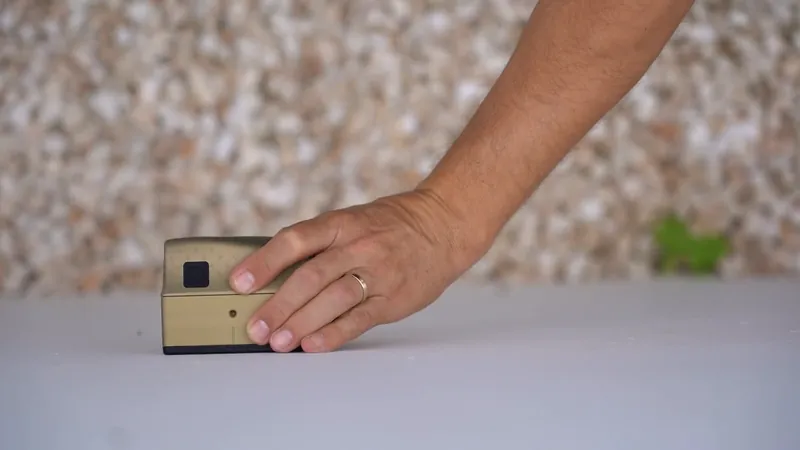
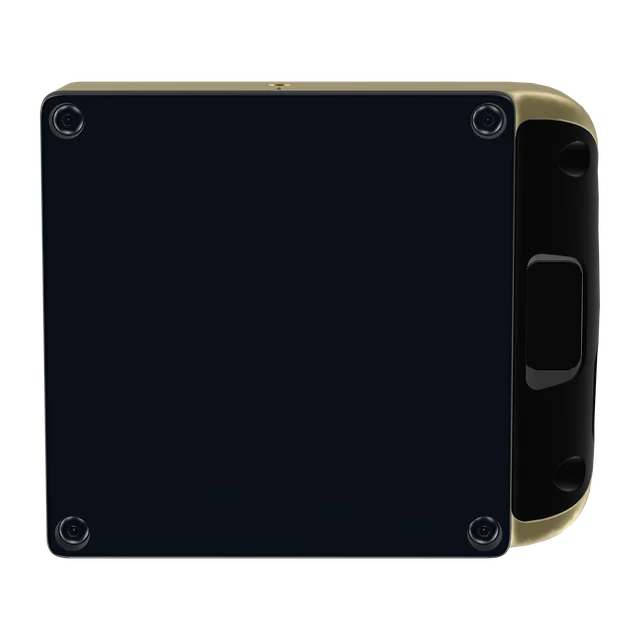
This side goes flat on the surface.
Where Eagle XR fits
We found nothing Screening Eagle has published about Eagle XR on hollowcore planks or other precast floors. Its App Store listing names the materials as concrete (dry, normal or wet), drywall and masonry (brick and block), and names voids and cavities among the things it shows10. The product page says Eagle Intelligence is trained on concrete and learning more materials11. If precast floors are your daily work, ask Screening Eagle before you order. Its FAQ calls Eagle XR "a first look for everyday work", not a GPR11.
Prestressed floors that are cast on site follow different rules: read drilling into a post-tensioned slab. For the hour before any core, use the core drilling checklist.
Want to see inside before the next hole?
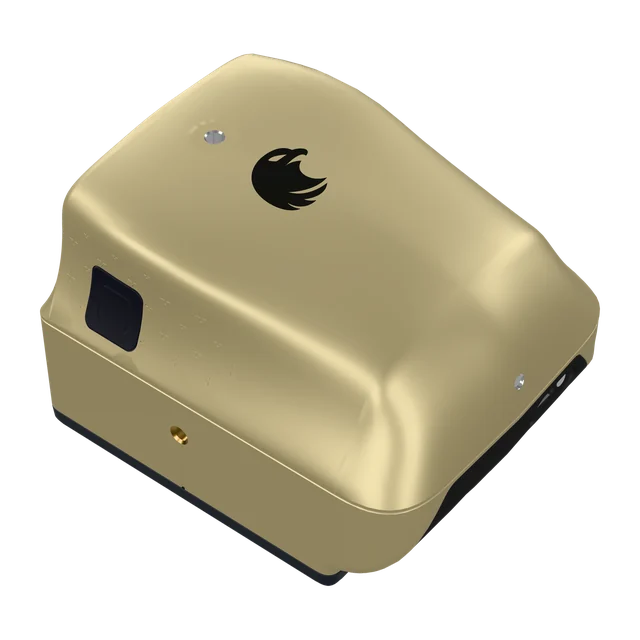
Eagle XR is a pocket concrete scanner that pairs with your phone and shows rebar, cables, plastic pipes and air voids at their depth. Stated depth in concrete: up to 40 cm. CHF 3,950 excluding VAT, import taxes and delivery.
Buy in Solar GoldPartner link: we may earn a commission. You pay Screening Eagle's normal price.
- Sold and shipped by Screening Eagle
- Same price in all four finishes
- Card, Apple Pay or Google Pay
- Express shipping from Switzerland. US orders ship from Pennsylvania
Sources
- PCI, G/C PCI chapter, Hollowcore FAQs, read 16 November 2026, www.pci.org
- Oldcastle Infrastructure, Elematic Hollowcore Plank 2019 Technical Data Guide, read 16 November 2026, oldcastleinfrastructure.com
- Ibstock, Hollowcore finishes and service runs, read 16 November 2026, www.ibstock.co.uk
- Milbank, General Method Statement, August 2023, read 16 November 2026, www.milbank.co.uk
- Milbank and Spit, Precast concrete fixing guide, read 16 November 2026, www.milbank.co.uk
- PlaceMakers (New Zealand), Penetrating suspended slabs (part 2), a CCANZ article, April 2014, read 16 November 2026, underconstruction.placemakers.co.nz
- The Concrete Centre, Hollowcore slabs, read 16 November 2026, www.concretecentre.com
- Hilti, KWIK HUS-EZ screw anchor, design information in hollow core concrete, read 16 November 2026, files-ask.hilti.com
- GSSI, Concrete Handbook MN72-367 Rev H, read 16 November 2026, atecorp.com
- Apple App Store, Eagle XR listing by Screening Eagle Technologies AG, read 15 November 2026, apps.apple.com
- Screening Eagle, Eagle XR product page and FAQ, read 16 November 2026, xr.screeningeagle.com