Concrete scanning standards: which documents cover locating rebar and services
Most of these documents are guides and recommendations, not a pass mark. None of them is met by buying a tool. They describe a method, the people who use it and what goes in the report.
Before you take a job that names a standard
Stop and call a scanning professional who works to that document if
- the contract names a document you do not work to
- the client expects a qualified operator to sign the result
The short version of this page. The details and sources follow below.
From Concrete scanning standards: which documents cover locating rebar and services: drillclear.com/guides/concrete-scanning-standards, where every step has its sources.
Where these facts come from. Every document number, title, edition and scope below was read on the issuing body's own page on 16 November 2026. We have not read the full texts, most of which are sold, and our summary is no substitute for them.
The short answer
No single standard tells you a spot is safe to drill. The documents in this field do three other jobs. Some explain how a test method works and what limits it, such as radar or the covermeter. Some set out how a survey is planned, done and reported. Some are safety guidance for anyone who works near buried or hidden services.
So when a client asks for a scan "to standard", reply with a question: which document, and which part of it?
The documents
Nine documents from seven issuers: six on test methods, three on buried services.
| Document | Issued by | What it is for |
|---|---|---|
| ACI PRC-228.2-13 | American Concrete Institute | Review of non-destructive test methods for concrete and its reinforcement, radar and covermeters among them1 |
| ASTM D6432-19 | ASTM International | Guide to surface ground penetrating radar for subsurface investigation3 |
| BS 1881-204:1988 | BSI | Recommendations on electromagnetic covermeters4 |
| DGZfP B 02 (2025) | DGZfP, Deutsche Gesellschaft für Zerstörungsfreie Prüfung | Measuring concrete cover and locating reinforcement5 |
| DGZfP B 10 (2024) | DGZfP | The radar method in construction6 |
| TR48 (1997) | The Concrete Society | Guidance on radar testing of concrete structures7 |
| PAS 128:2022 | BSI | Detecting, verifying and locating underground utilities8 |
| ASCE/UESI/CI 38-22 | American Society of Civil Engineers | Investigating and documenting existing utilities in project design9 |
| HSG47 (third edition, 2014) | UK Health and Safety Executive | Avoiding danger from underground services10 |
Inside concrete: the testing documents
These six cover test methods for the concrete element; ASTM D6432 and DGZfP B 10 also reach beyond concrete, to the ground.
ACI PRC-228.2-13
Its full title is Report on Nondestructive Test Methods for Evaluation of Concrete in Structures. ACI Committee 228 wrote it, and it was published in 20131. In 2020 ACI added PRC to all its guides and reports and dropped the R for reports2, so older references write it as ACI 228.2R-13. It reviews methods for evaluating the condition of concrete and steel reinforcement, among them magnetic and electrical methods, infrared thermography and ground-penetrating radar. Its keywords name the covermeter, and a chapter covers planning an investigation, defining its scope and reporting the results1. It is a report for people who evaluate structures, not a drilling procedure.
ASTM D6432-19
The Standard Guide for Using the Surface Ground Penetrating Radar Method for Subsurface Investigation is listed as active3. It covers GPR equipment, field procedures and interpretation. Its scope names geologic, engineering, hydrologic and environmental work, and mentions rebar in concrete and the inspection of concrete structures. Three points matter on site3:
- Radar measures two-way travel time, not depth. The relative permittivity is normally unknown, so you estimate the wave speed or work it out from a reflector of known depth.
- The guide cannot replace education or experience, and the quality of the result depends on the competence of the people doing the work.
- The word Standard in its title "means only that the document has been approved through the ASTM consensus process".
BS 1881-204:1988
Testing concrete. Recommendations on the use of electromagnetic covermeters was published on 31 August 1988, and BSI still lists it as current4. It describes how electromagnetic devices estimate the position, depth and size of reinforcement, how to use them, the accuracy to expect and the factors that may influence the results4. It is about reinforcement, not about pipes or cables.
DGZfP B 02 and B 10
The DGZfP, the German society for non-destructive testing, publishes a B series of guidance for construction. B 02, December 2025, 58 pages, is sold in German and in English as Guideline for Non-Destructive Testing of Concrete Cover and Locating of Reinforcement on Reinforced and Prestressed Concrete Elements. It covers methods and equipment for locating reinforcement and embedded objects and for measuring concrete cover. Its contents include detectability and accuracy, a functional check, personnel qualifications, minimum requirements for documentation and notes on the call for tenders5.
B 10, Merkblatt für das Radarverfahren zur Zerstörungsfreien Prüfung im Bauwesen, is dated December 2024 and has 85 pages. In our translation, it explains how radar is used to test structures, elements and the ground without damage. It is aimed at users of the method and at those who plan and tender the work. It gives examples on concrete, masonry, ground, asphalt and railway track, and notes on personnel qualification, method validation and writing a test record6.
Concrete Society TR48
TR48 dates from 1997 and has 80 pages. It explains the benefits and limitations of ground probing radar (GPR) for investigating concrete structures, to help engineers judge where GPR may be effective. It also covers the contractual side of radar surveys7.
In the ground: the utility documents
As their issuers describe them, these three documents are about utilities in the ground, not conduit cast into a slab. Know the difference before you agree to a scope.
- PAS 128:2022, Underground utility detection, verification and location. Specification, published 30 April 2022, is a full revision of the 2014 edition. It sorts results into quality levels based on survey type, location accuracy, post-processing and the level of supporting data. It covers project planning, records searches, detection, verification, location and deliverables. The 2022 edition added guidance on the training and qualifications of practitioners8.
- ASCE/UESI/CI 38-22, Standard Guideline for Investigating and Documenting Existing Utilities, is the updated 2022 re-issue, under a new name, of ASCE 38-02. ASCE says it guides engineers through utility investigations during project development9.
- HSE HSG47, Avoiding danger from underground services, third edition 2014, is free to download. It is aimed at everyone who commissions, plans, manages or does work near underground services. It sets out three parts of a safe system of work during excavation: planning the work, locating and identifying buried services, and safe excavation10.
For drilling walls and floors, HSE's short sheet CIS65 is the plainer rule: "Make sure you know the location of concealed power cables and gas pipes before drilling into walls or floors. If their location is unknown, turn services off before drilling"11.
What a client usually means by "to standard"
Going by the documents' own contents, usually four things: a named document, a qualified operator, a written record and stated limits.
- A named document and method. PAS 128 speaks of clarity about the service provided and the methods used8.
- A qualified operator. DGZfP B 02 and B 10, PAS 128 and ASTM D6432 all address the competence or qualification of the people doing the work3568.
- A written record. B 02 sets minimum requirements for documentation, B 10 covers the test record, and ACI's report has a section on reporting results156.
- Stated limits. Accuracy, and what affects it, is part of BS 1881-204 and DGZfP B 0245. Our advice: make sure the report also says what the scan could not see.
Where a pocket scanner fits
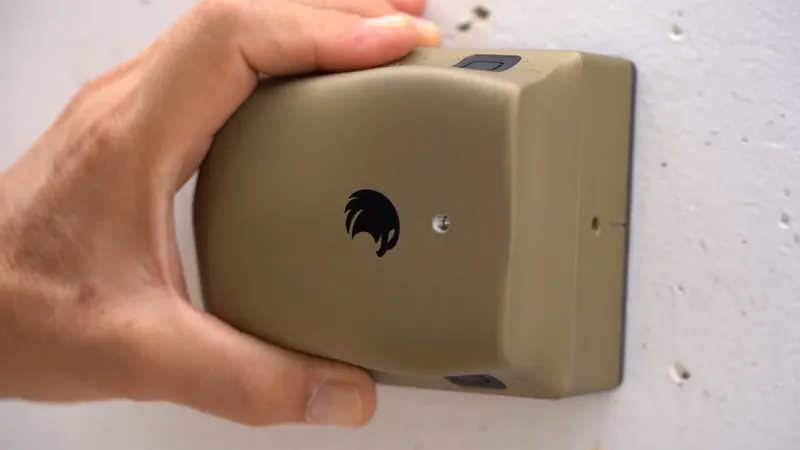
Owning a pocket scanner does not make a job a survey to standard, or a crew member a qualified operator. The documents are about method, people and reporting. Screening Eagle draws a similar line: its FAQ calls Eagle XR "a first look for everyday work", not a GPR, and says that for investigations, mapping and reports professionals use GPR systems such as Proceq's12.
On the pages we read, Screening Eagle does not state that Eagle XR follows or meets any of these documents. If a contract names one, use a scanning professional who works to it, or ask the client in writing what they will accept.
For what the methods can see, read GPR, wall detector or pocket scanner. For why depth on a scan is always an estimate, read how to read a concrete scan. For cover in the design codes, read how deep is rebar.
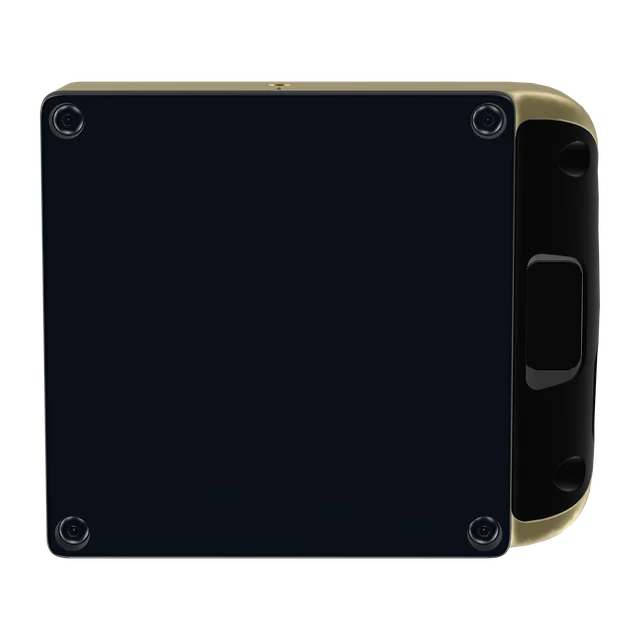
This side goes flat on the surface.
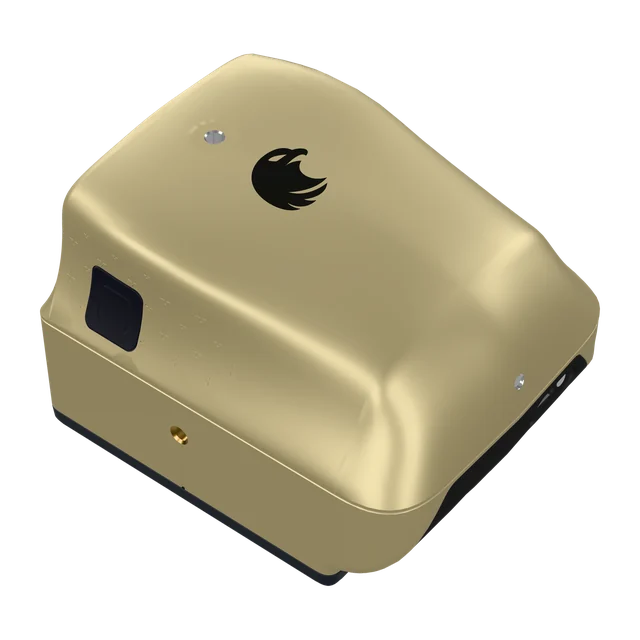
Want to see inside before the next hole?
Eagle XR is a pocket concrete scanner that pairs with your phone and shows rebar, cables, plastic pipes and air voids at their depth. Stated depth in concrete: up to 40 cm. CHF 3,950 excluding VAT, import taxes and delivery.
Buy in Solar GoldPartner link: we may earn a commission. You pay Screening Eagle's normal price.
- Sold and shipped by Screening Eagle
- Same price in all four finishes
- Card, Apple Pay or Google Pay
- Express shipping from Switzerland. US orders ship from Pennsylvania
Sources
- American Concrete Institute, store page for ACI PRC-228.2-13 Report on Nondestructive Test Methods for Evaluation of Concrete in Structures, read 16 November 2026, www.concrete.org
- American Concrete Institute, ACI Updates Product Codes for its Codes, Specifications, and Practices, 18 December 2020, read 16 November 2026, www.concrete.org
- ASTM International, ASTM D6432-19 Standard Guide for Using the Surface Ground Penetrating Radar Method for Subsurface Investigation, read 16 November 2026, store.astm.org
- BSI Knowledge, BS 1881-204:1988 Testing concrete: Recommendations on the use of electromagnetic covermeters, read 16 November 2026, knowledge.bsigroup.com
- DGZfP, B02 E 2025 Guideline for Non-Destructive Testing of Concrete Cover and Locating of Reinforcement on Reinforced and Prestressed Concrete Elements, read 16 November 2026, publikationen.dgzfp.de
- DGZfP, B 10 Merkblatt für das Radarverfahren zur Zerstörungsfreien Prüfung im Bauwesen, read 16 November 2026, publikationen.dgzfp.de
- The Concrete Society bookshop, TR48 Guidance on radar testing of concrete structures, read 16 November 2026, www.concretebookshop.com
- BSI Knowledge, PAS 128:2022 Underground utility detection, verification and location: Specification, read 16 November 2026, knowledge.bsigroup.com
- American Society of Civil Engineers, Newly updated ASCE 38-22 utility engineering standard and new companion standard ASCE 75-22 now available, 20 July 2022, read 16 November 2026, www.asce.org
- UK Health and Safety Executive, HSG47 Avoiding danger from underground services, read 16 November 2026, www.hse.gov.uk
- UK Health and Safety Executive, CIS65 Avoiding concealed services and overhead power lines, read 16 November 2026, www.hse.gov.uk
- Screening Eagle, Eagle XR product page and FAQ, read 16 November 2026, xr.screeningeagle.com