Drilling into a concrete slab on metal deck
A slab on metal deck has a steel sheet along its whole underside. Radar does not pass through steel. So from below radar cannot see past the deck, and from above it sees down to the deck at most.
Before you drill into a slab on metal deck
Stop and call the project structural engineer if
- an opening goes through the slab and nobody has signed it off
- several holes sit close together or in a row across the span
- you want a fixing other than the deck maker's own system
- there is any sign of tendons
The short version of this page. The details and sources follow below.
From Drilling into a concrete slab on metal deck: drillclear.com/guides/metal-deck-slabs, where every step has its sources.
What a composite deck slab is
A composite floor is a concrete topping cast onto a corrugated steel deck that spans between joists or beams. The cold-formed deck is the formwork during the pour, and then works with the concrete as reinforcement1. Cut the deck and you cut part of the floor's reinforcement.
The corrugations have names. Hilti speaks of upper and lower flutes5. The UK deck maker SMD speaks of ribs and troughs7. There can be steel in the concrete too: SCI mentions the case, unusual in the UK, of a slab with extra bars in the troughs, and bars and fabric in the slab between the ribs2.
The Steel Construction Institute also reports growing interest in replacing the mesh with steel fibres12, and fibres change what a scan shows: see fibre-reinforced concrete.
What radar sees from the top
Radar does not go through the deck, so from the top it sees only the concrete above the steel. SPH Engineering, which sells GPR systems, says a continuous metal layer reflects nearly all of the signal: "Concrete on metal decks is generally opaque to GPR."3 GSSI's handbook says metal even as thin as aluminium foil is a complete reflector, and targets behind it will not be detected4.
SPH lists the top of a metal deck among the flat, continuous reflections that run across a whole scan3. Below that line, no target shows.
From the top you often cannot tell where the flutes are. Hilti says that for anchors drilled into the top of a deck slab, the minimum concrete thickness is measured from the top of the upper flute, because in many cases installers cannot tell where the flutes are when looking down on the deck5. So for an anchor from the top, count only the concrete over the upper flute, wherever you drill. We found no source we could read today on whether a scan from the top shows the flute pattern, so do not count on it.
What radar sees from below
From below, radar cannot see past the steel deck. The deck is the continuous metal layer SPH describes3, so bars, conduit and pipes above it are hidden from a scanner held on the soffit. What you do get from below is your eyes: you can see the profile and which flute you are under.
Fixings into the soffit
Use the deck maker's soffit system or an approved anchor, spaced and loaded as its maker says.
- Use the system made for that deck. SMD offers soffit fixings, also called wedge nuts, for 6, 8 and 10 mm drop rods, with safe working loads of up to 2.0 kN, depending on the profile and drop rod size7.
- Spread them out. SMD recommends fixings on a nominal minimum 600 mm grid and asks to be consulted for closer groups7. For Hilti's KB-TZ2 anchor in the soffit of a deck slab, the minimum spacing along the flute is 3 x the effective embedment6. Each product has its own numbers: use the ones for yours.
- Wait for the concrete. SMD says soffit fixings may only be installed or loaded once the slab has gained its specified design strength7.
- Other anchors need approval. SMD says approval for other fixings should come from the project structural engineer7.
- Bolting through the slab. SMD asks for non-percussive methods, to disturb the bond between deck and concrete as little as possible, and for the bolt to go through the trough section with a spreader plate7.
Holes and cores
Every opening is the engineer's business. STRUCTURE magazine says it is essential that a professional engineer examines all openings1. A core through the slab takes out the concrete slug and the metal deck under it. Slab reinforcement may be closely spaced and could well be cut by accident, so the article says to coordinate hole positions and reinforcement with the structural engineer before coring, and notes that a scanner can help locate the existing bars1.
| Source | Small | Medium | Large |
|---|---|---|---|
| SCI AD 447, from P300 (UK) | Up to 300 mm square: normally no extra reinforcement | 300 to 700 mm: normally extra reinforcement in the slab | Over 700 mm: trimmed with steelwork back to the beams |
| SMD, holes across the span | Up to 250 mm (R51+) or 300 mm (TR50, TR60+, TR80+ profiles): no special treatment | Up to 700 mm: extra reinforcement | Over 700 mm: trimming steelwork designed by others |
| STRUCTURE magazine, citing the SDI Floor Deck Design Manual (US) | Up to 12 inches | 1 to 4 feet | Over 4 feet: deck edges supported by framing |
Sources: SCI2, SMD8, STRUCTURE1.
- Holes add up. SMD treats a series of holes across the span as one large void8. STRUCTURE says closely spaced openings may need to be treated as a medium or large opening1.
- A small hole can still cut a bar. SCI: "A 300 mm wide opening could very easily 'interrupt' a bar in a trough."2
- Cut the deck after the concrete has cured. SCI says small and medium holes in the deck should not be cut until the concrete around the opening has cured2. SMD's own method is to box the opening out before the pour, then cut the deck with a non-percussive tool once the slab has cured8.
Conduit and pipes in the slab
Services can be cast into the slab above the deck. The Steel Joist Institute says conduit can be embedded in the floor slab if the Engineer of Record approves, that getting to it later means breaking out part of the slab, and that special care is then needed to avoid damaging the metal deck9.
Only a scan from the top has a chance to see that conduit. Look for the drawings that show it, and ask the electrician who ran it.
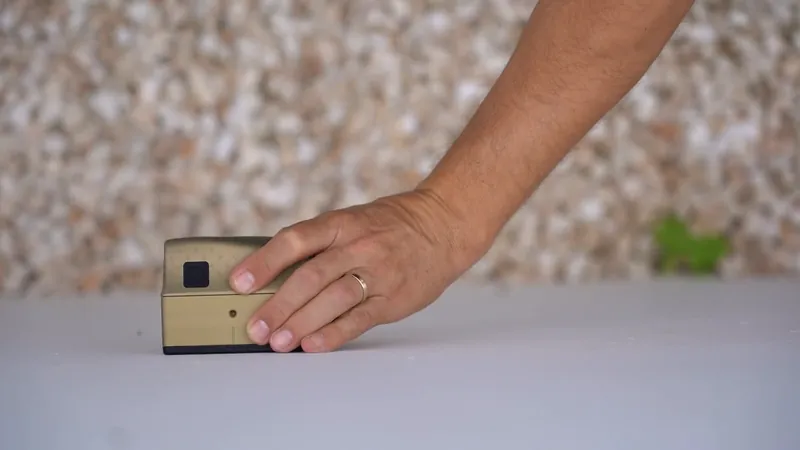
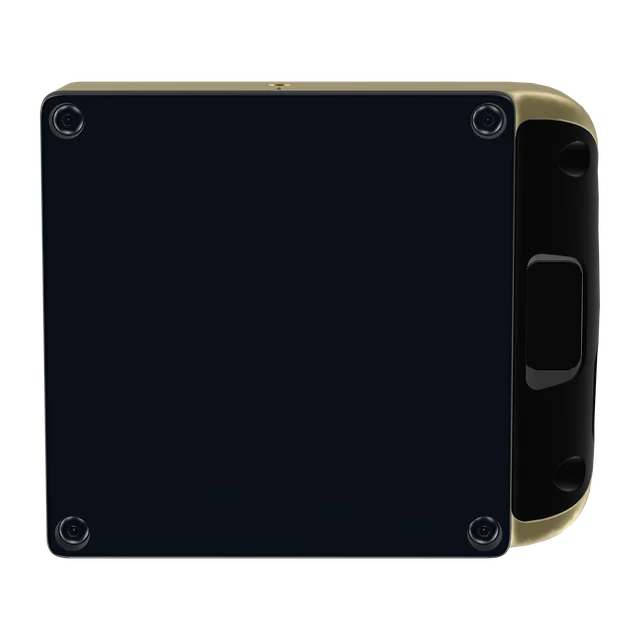
This side goes flat on the surface.
Where Eagle XR fits
We found nothing Screening Eagle has published about Eagle XR on slabs over metal deck. Its App Store listing names the materials as concrete (dry, normal or wet), drywall and masonry (brick and block)10, and the product page says Eagle Intelligence is trained on concrete and learning more materials11. That metal stops the signal34 is true of radar scanners as a class, not a published Eagle XR specification. If deck slabs are your daily work, ask Screening Eagle before you order. Its FAQ calls Eagle XR "a first look for everyday work", not a GPR11.
Before any core, run through the core drilling checklist. Precast floors have their own rules: see drilling into hollowcore planks and precast floors. If there is any sign of tendons, read drilling into a post-tensioned slab first.
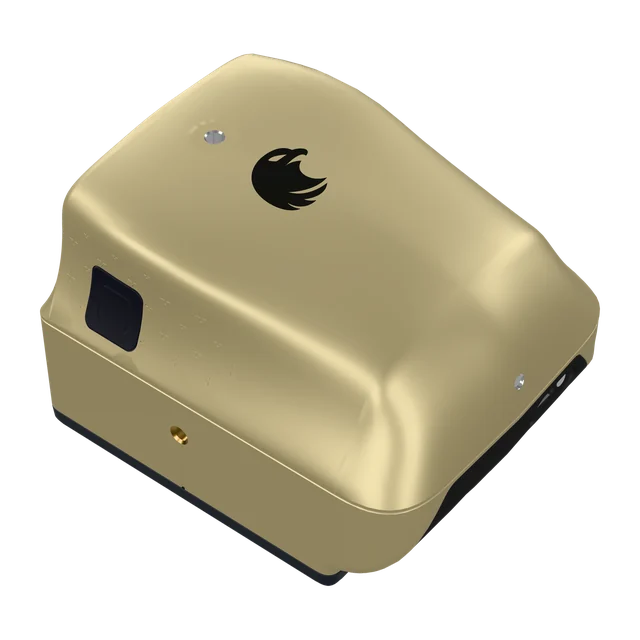
Want to see inside before the next hole?
Eagle XR is a pocket concrete scanner that pairs with your phone and shows rebar, cables, plastic pipes and air voids at their depth. Stated depth in concrete: up to 40 cm. CHF 3,950 excluding VAT, import taxes and delivery.
Buy in Solar GoldPartner link: we may earn a commission. You pay Screening Eagle's normal price.
- Sold and shipped by Screening Eagle
- Same price in all four finishes
- Card, Apple Pay or Google Pay
- Express shipping from Switzerland. US orders ship from Pennsylvania
Sources
- STRUCTURE magazine, Natasha Zamani, Structural Considerations for Openings in Composite Floor Decks, read 16 November 2026, www.structuremag.org
- Steel Construction Institute, Advisory Desk AD 447: Openings in composite slabs, read 16 November 2026, steelconstruction.info
- SPH Engineering, GPR Scanning in Concrete to Find Rebar, PT Cables and Voids, read 16 November 2026, www.sphengineering.com
- GSSI, Concrete Handbook MN72-367 Rev H, read 16 November 2026, atecorp.com
- Hilti USA Engineering Center, Is it possible to check anchors on the top of a composite metal deck over high flutes, read 16 November 2026, www.hilti.com
- Hilti USA Engineering Center, Anchors at Underside of Concrete over Metal Deck, read 16 November 2026, www.hilti.com
- SMD, Technical Guidance Notes 13.8, Service fixings, read 16 November 2026, smdltd.co.uk
- SMD, Technical Guidance Notes 5.6, Forming service holes, read 16 November 2026, smdltd.co.uk
- Steel Joist Institute, FAQs: Embedded Conduits, read 16 November 2026, steeljoist.org
- Apple App Store, Eagle XR listing by Screening Eagle Technologies AG, read 15 November 2026, apps.apple.com
- Screening Eagle, Eagle XR product page and FAQ, read 16 November 2026, xr.screeningeagle.com
- New Steel Construction (Steel Construction Institute), Use of fibre-reinforced concrete in composite slabs (part 1), January 2023, read 16 November 2026, www.newsteelconstruction.com